
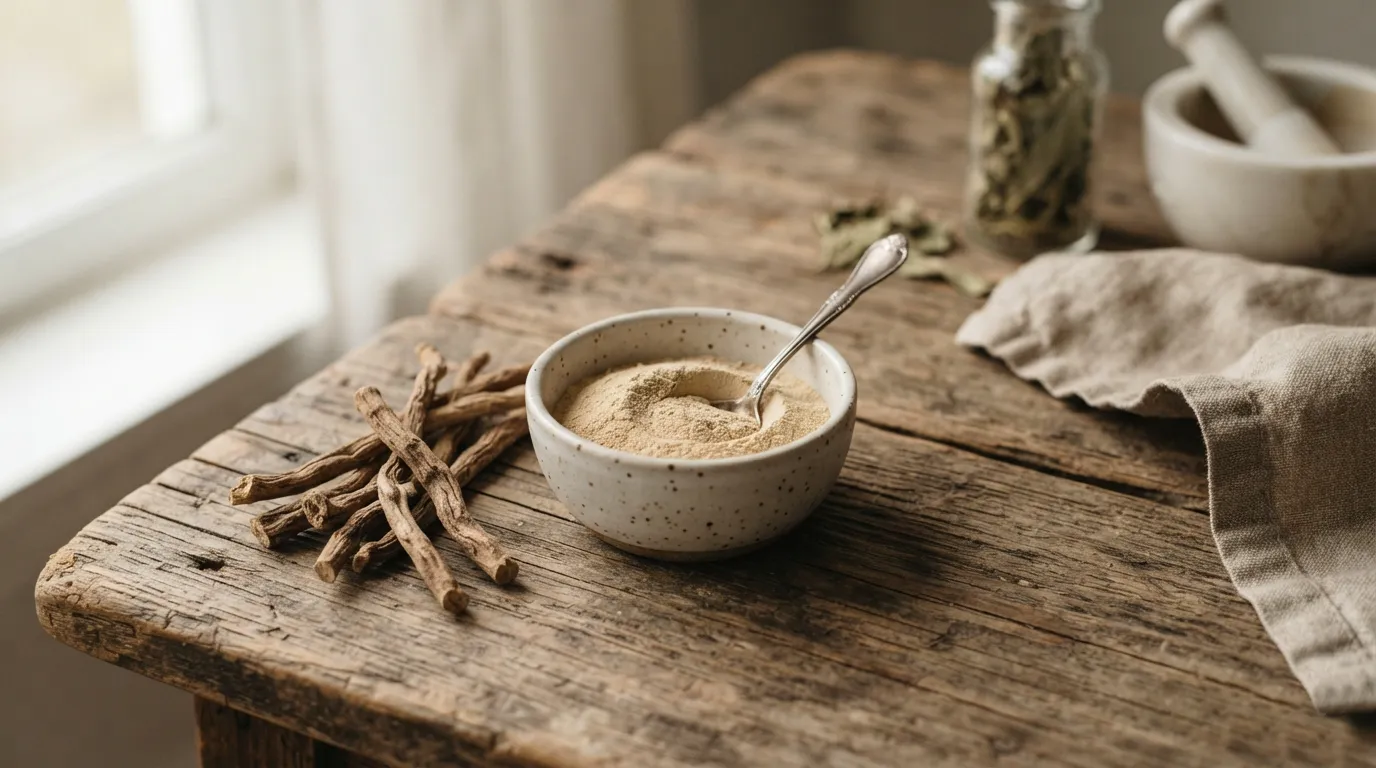

Ashwagandha (Withania somnifera), sometimes called Indian ginseng, is a root used in Ayurvedic medicine for over 3,000 years. Its name translates roughly to “smell of the horse,” a nod to its traditional reputation for building strength and vitality. It’s one of the more studied adaptogens on the market today, used for stress management and general resilience.
What the research actually shows
Ashwagandha has a genuine, if still-developing, evidence base. Several small clinical trials have found it may help lower cortisol levels and reduce self-reported stress and anxiety compared to placebo, and some studies point to modest improvements in sleep quality. The effect sizes and quality vary between studies, and larger, longer-term research is still ongoing — so it’s fair to call it promising, not proven beyond doubt. Be wary of any source citing precise percentages without a named, checkable study behind them.
How people take it
| Form | Typical daily dose |
|---|---|
| Capsules | 300–500 mg, once or twice daily |
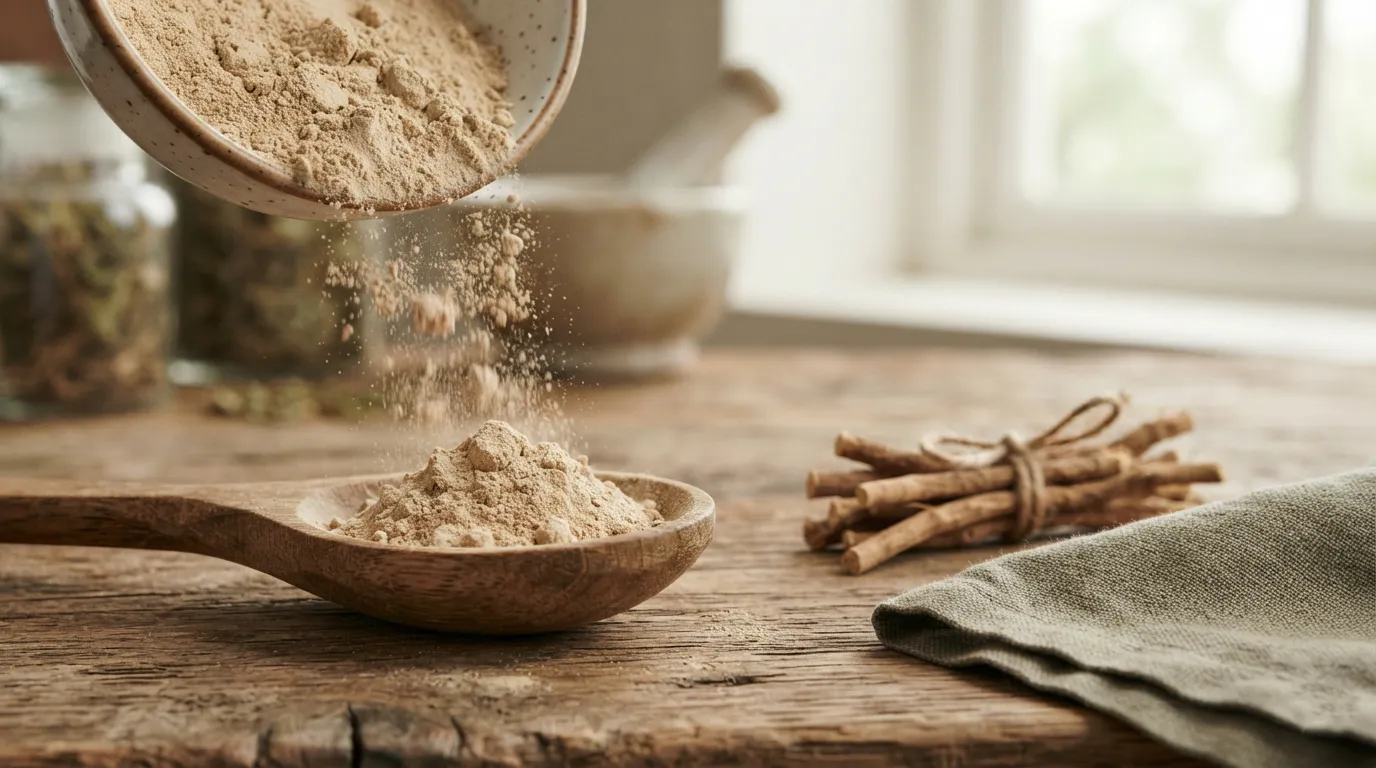
| Powder | 1–2 teaspoons (3–6 g) |
| Tincture | 1–2 ml, up to three times daily |
Things to know before trying it
Ashwagandha is generally well tolerated, but it’s not risk-free for everyone. Possible side effects include digestive upset and drowsiness. It can interact with thyroid medication, sedatives, and immunosuppressants, and it isn’t recommended during pregnancy or while breastfeeding. Talk to a healthcare provider before starting it, especially if you’re on any regular medication — and start with a lower dose to see how your body responds.
You might also find our pieces on ashwagandha benefits for women and senolytic supplements useful.
FAQ
What does the research say about ashwagandha and stress?
Several small clinical trials suggest it may lower cortisol levels and reduce self-reported stress and anxiety compared to placebo, though larger, longer-term studies are still needed.
What’s a typical dose of ashwagandha?
Capsule doses commonly range from 300 to 500 mg once or twice daily, while powder is usually taken at 1 to 2 teaspoons a day.
Who should avoid taking ashwagandha?
It’s not recommended during pregnancy or breastfeeding, and it can interact with thyroid medication, sedatives, and immunosuppressants — check with a healthcare provider first.