
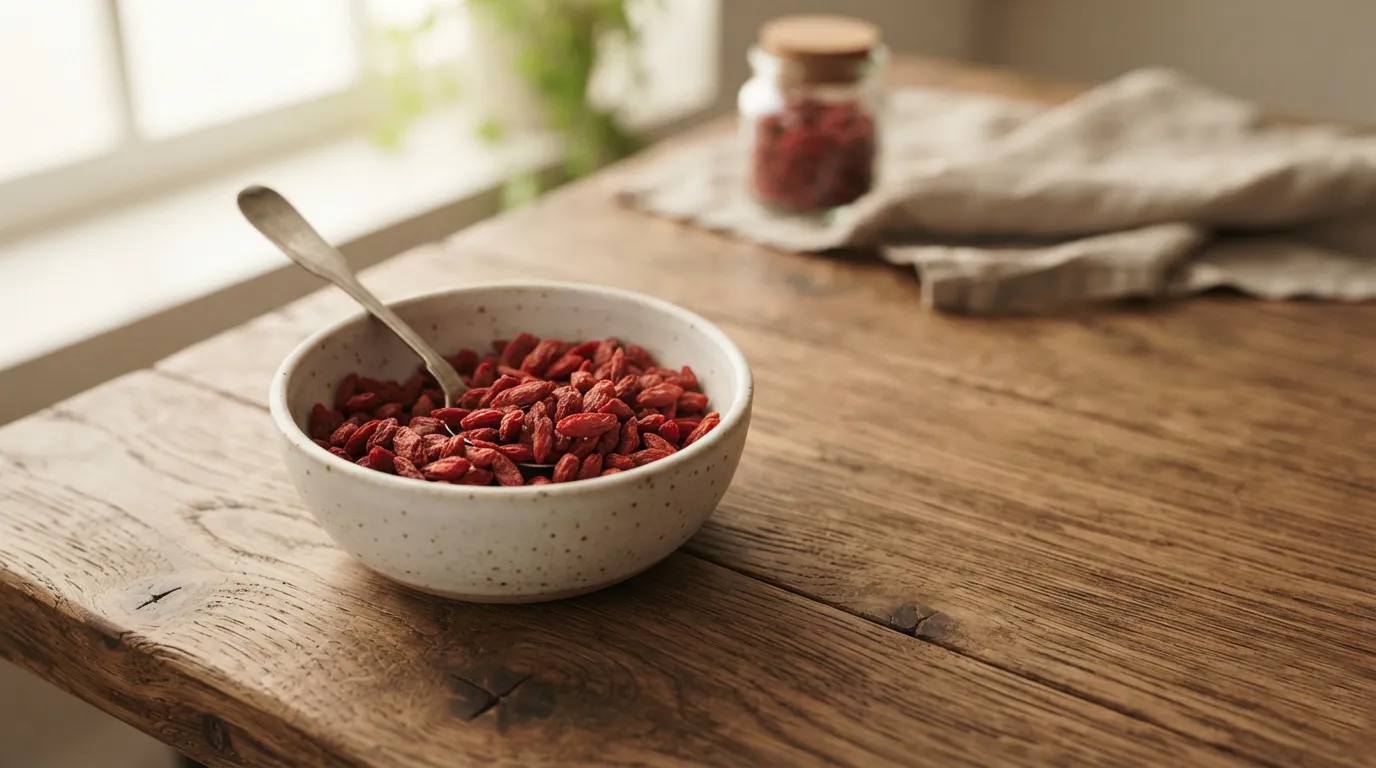

Goji berries (Lycium barbarum) have been used in traditional Chinese medicine for over 2,000 years, grown mainly in the Tibet and Mongolia regions. They’ve since spread globally as a popular addition to wellness-focused diets.
Nutrition profile
| Nutrient (per 100g) | Amount |
|---|---|
| Calories | 349 |
| Protein | 14.3 g |
| Fiber | 7.0 g |
| Vitamin C | 48.4 mg (81% DV) |
| Iron | 6.8 mg (38% DV) |
What they’re used for
Goji berries are a genuinely good source of vitamin C, zinc, and antioxidants like beta-carotene and zeaxanthin, which supports both immune function and eye health. As with most antioxidant-rich foods, we won’t attach a specific comparative antioxidant score here — those figures are inconsistent between sources and easy to overstate. The honest summary: they’re a nutrient-dense fruit worth including in a varied diet, not a cure for anything specific.
How to eat them
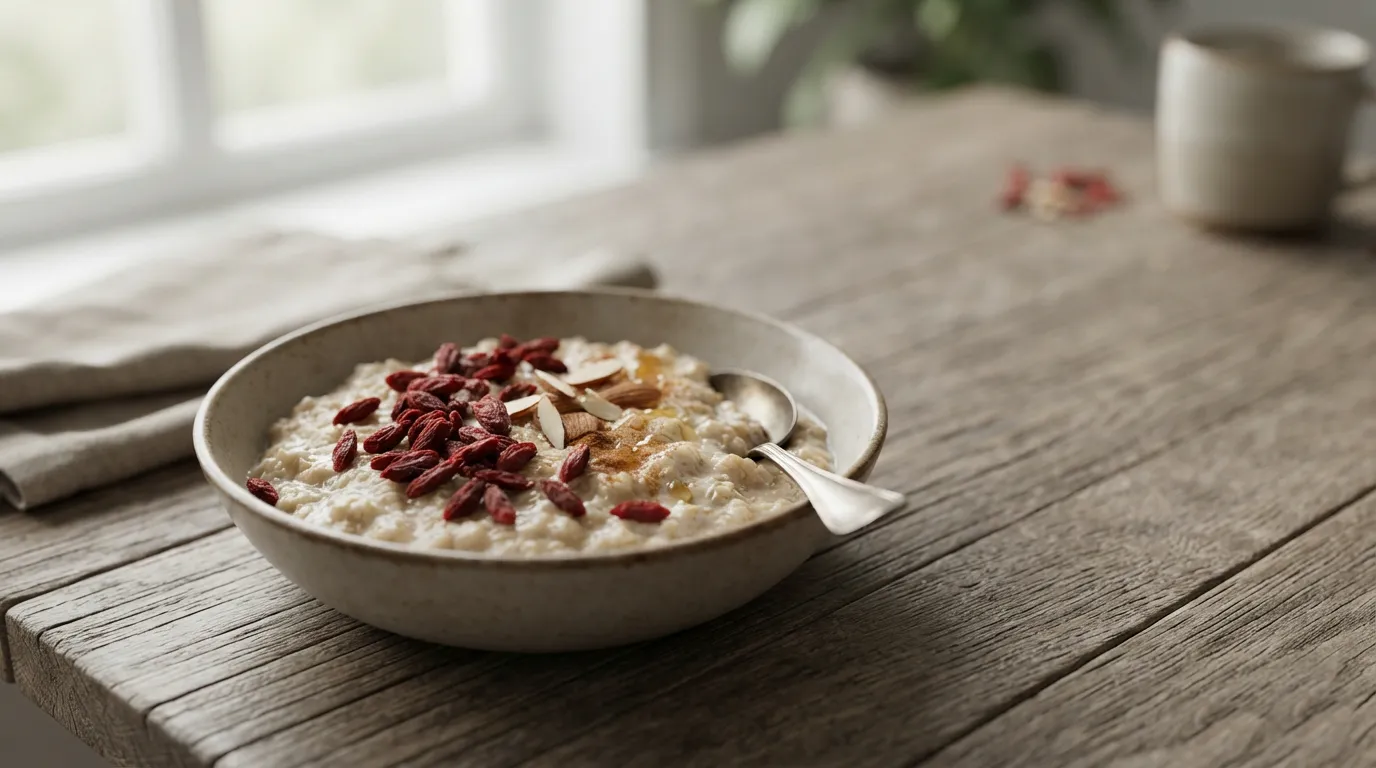
Dried goji berries work well as a snack on their own, stirred into oatmeal, blended into smoothies, or added to trail mix and salads. A small handful (about an ounce) is a reasonable serving to start with.
Worth knowing before you start
Goji berries can interact with blood thinners, diabetes medication, and blood pressure medication — they may amplify the effects of all three. If you’re on any of these, check with your doctor before adding goji berries regularly. Store dried berries in an airtight container away from heat and moisture, and choose ones that are bright red and slightly chewy, not dry and brittle.
For related reading, see our pieces on modern superfoods and moringa.
FAQ
What nutrients are goji berries especially high in?
They’re a strong source of vitamin C, iron, zinc, and antioxidants like beta-carotene and zeaxanthin, which support both immune function and eye health.
Can goji berries interact with medication?
Yes. They may amplify the effects of blood thinners, diabetes medication, and blood pressure medication, so check with a doctor if you’re on any of these.
How should I store dried goji berries?
Keep them in an airtight container away from heat and moisture, and choose berries that are bright red and slightly chewy rather than dry and brittle.