

Rice has been cultivated for roughly 10,000 years, starting near China’s Yangtze River before spreading across Asia and eventually the world. More than half the planet eats it regularly — not many foods can claim that kind of staying power.
White vs. brown
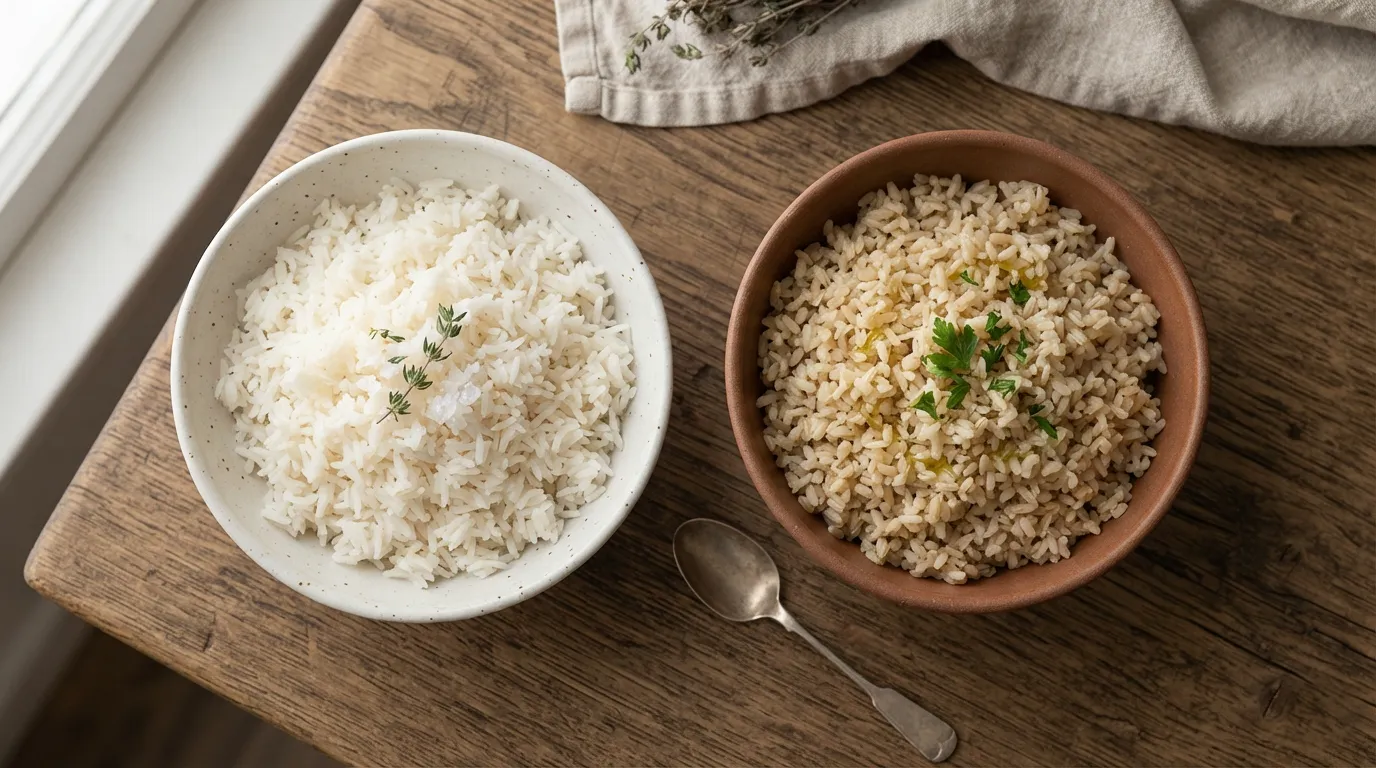
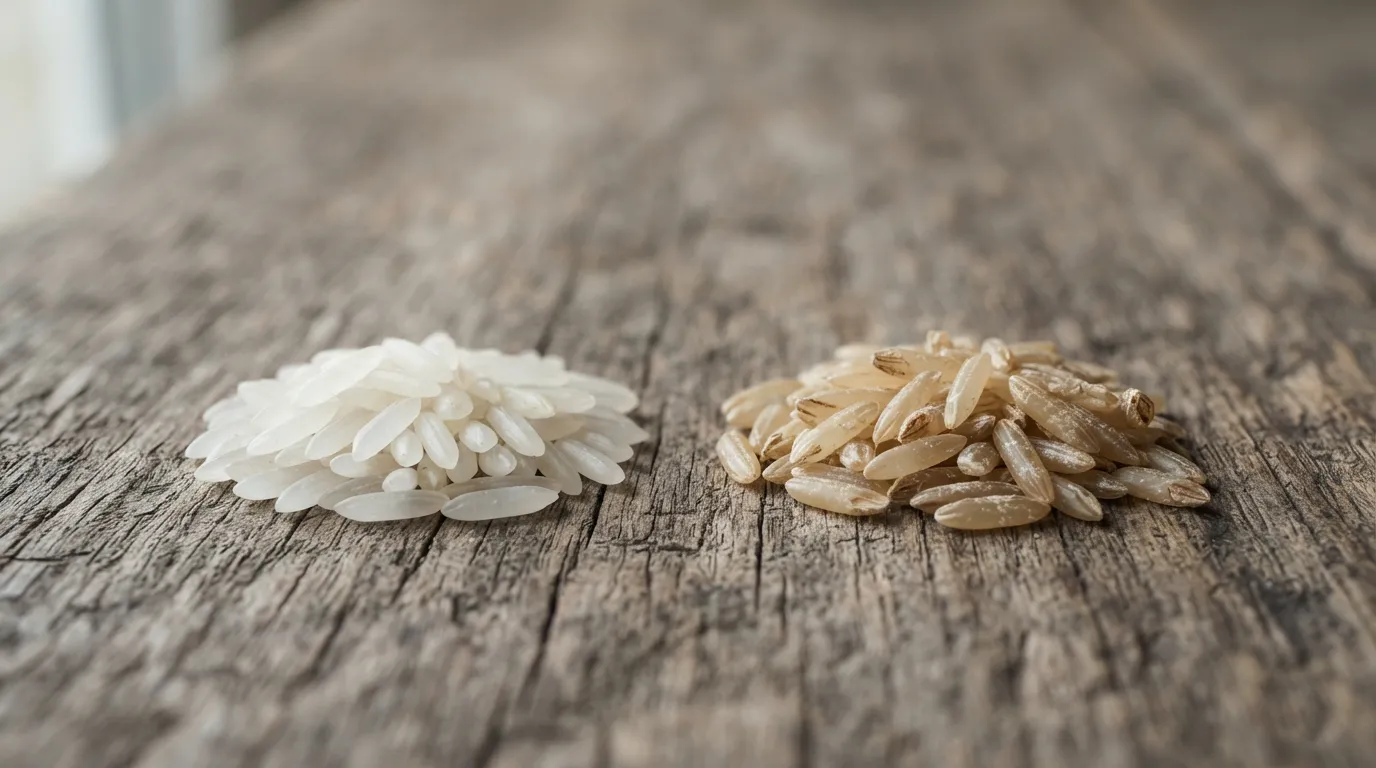
The difference comes down to processing. White rice has the bran and germ removed, which softens the texture and extends shelf life but strips out fiber and several nutrients along with it. Brown rice keeps all three layers — more fiber, more protein, a chewier bite, and a shorter shelf life as a tradeoff.
Picking a variety
Basmati brings a nutty, fluffy character that works well in Indian and Middle Eastern dishes. Jasmine is stickier and fragrant, common in Thai and Southeast Asian cooking. Arborio’s starch content makes it the right call for risotto specifically — other rice varieties won’t get that same creamy texture.
Cooking it properly
Rinse before cooking to remove surface starch — this matters more for basmati and jasmine than for short-grain varieties. A 2:1 water-to-rice ratio works for most white rice; brown rice needs closer to 2.5:1 and a longer simmer, usually 40 to 50 minutes versus 15 to 20 for white.
Beyond the side dish
Rice bowls, stuffed vegetables, rice-based soups — the format handles almost any direction you take it. Leftover rice, cooled and tossed with vegetables and a light dressing, makes a solid grain salad that holds up better than most people expect.
For more along these lines, check out our pieces on grains and millet.
FAQ
What’s the nutritional difference between white and brown rice?
Brown rice keeps its bran and germ layers, giving it more fiber and protein than white rice, which has those layers removed during processing.
What’s the right water-to-rice ratio?
A 2:1 water-to-rice ratio works for most white rice, while brown rice needs closer to 2.5:1 and a longer simmer of 40 to 50 minutes.
Which rice variety is best for risotto?
Arborio rice, thanks to its starch content, is the right choice for risotto — other varieties won’t produce the same creamy texture.