
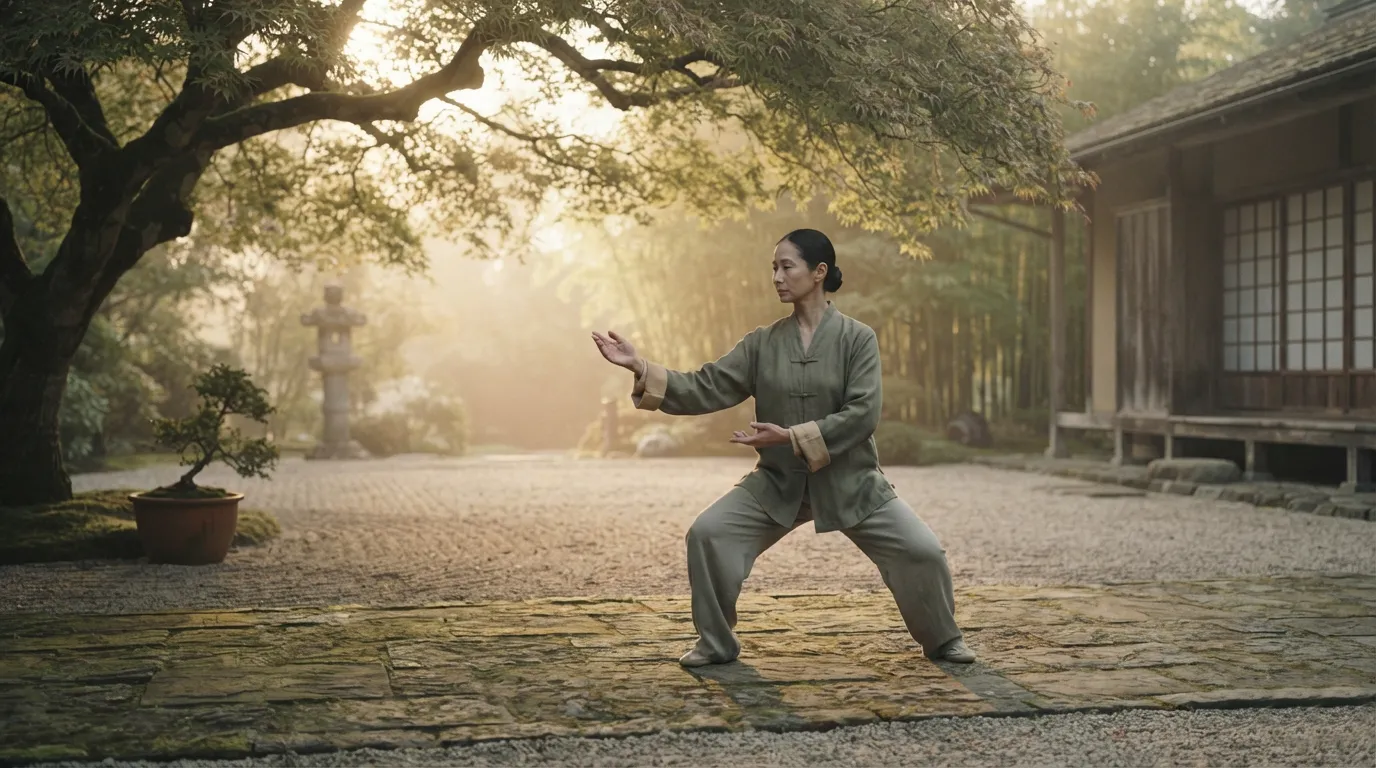

Tai chi looks slow because it is slow — that’s the whole design. Every movement flows into the next without pause, which forces a kind of attention that faster exercise doesn’t require. People stick with it less for the workout and more for what it does to their head.
Where it comes from
Tai chi developed in China as both a martial art and a spiritual practice, drawing heavily on Taoist philosophy — particularly the concept of yin and yang, the idea of balancing opposing forces rather than eliminating one in favor of the other. That balance shows up literally in the movements: weight shifting, tension releasing, action and stillness trading off.
What the practice actually involves
Four things underpin it: relaxation, alignment, breath control, and staying present. Stand with feet shoulder-width apart, knees soft, shoulders down. Breathe in through the nose, out through the mouth, slow and even. Move from one posture into the next without rushing — the transitions matter as much as the postures themselves.
Who it’s actually for
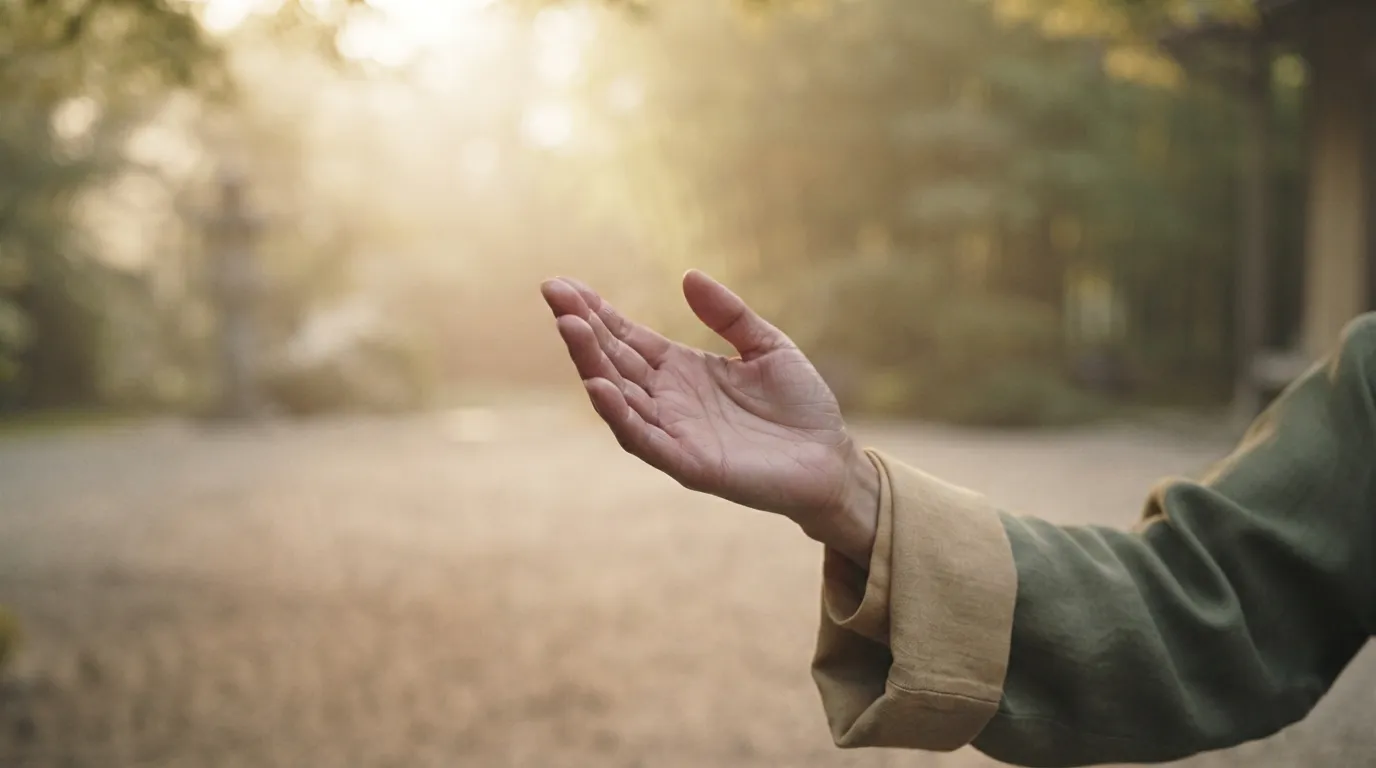
This is one of the more accessible movement practices out there. Low impact, adjustable pace, no need for prior fitness — which is part of why it’s popular with older adults and people managing chronic conditions, but it works just as well as a calming counterpart to more intense training for anyone else.
Starting out
A short daily session — even ten minutes — tends to stick better than an occasional long one. Morning practice sets a calmer tone for the day; evening practice works as a wind-down. Either way, consistency does more than duration. Pairing it with qigong is a natural next step if you want to go deeper into breath-focused movement.
Worth a look too: our articles on Qigong and prana and martial arts.
FAQ
Where does tai chi come from?
Tai chi developed in China as both a martial art and a spiritual practice, drawing heavily on Taoist philosophy, particularly the concept of yin and yang.
Is tai chi suitable for older adults or people with limited mobility?
Yes — it’s low impact, adjustable in pace, and doesn’t require prior fitness, which is part of why it’s popular with older adults and people managing chronic conditions.
How long should a tai chi session be to notice benefits?
A short daily session, even around ten minutes, tends to be more effective long-term than an occasional longer one.