
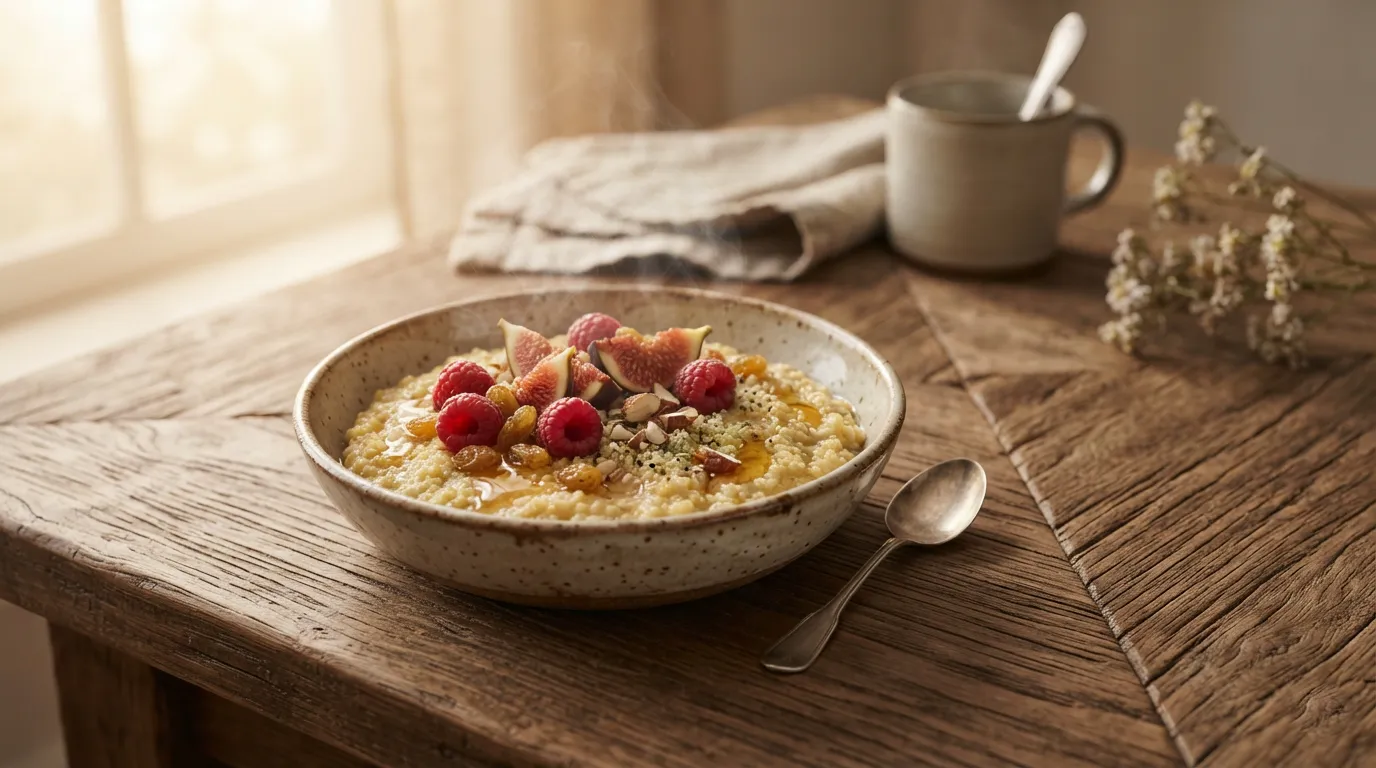

Millet doesn’t get the attention rice or quinoa does, but it’s been a dietary staple across Africa and Asia for thousands of years, and it holds its own nutritionally — especially for anyone managing blood sugar or looking for a gluten-free grain.
What’s in it
A 100-gram cooked serving provides about 119 calories and 3.5 grams of protein, plus a solid dose of magnesium. Its low glycemic index means it releases sugar into the bloodstream more slowly than rice, which is useful for anyone watching blood sugar swings.
Why it holds up well
Millet’s fiber supports digestion, and its magnesium content is linked to relaxed blood vessels and better blood pressure regulation. It’s also filling relative to its calorie count, which makes it a reasonable swap in dishes built around rice or couscous.
Cooking with it
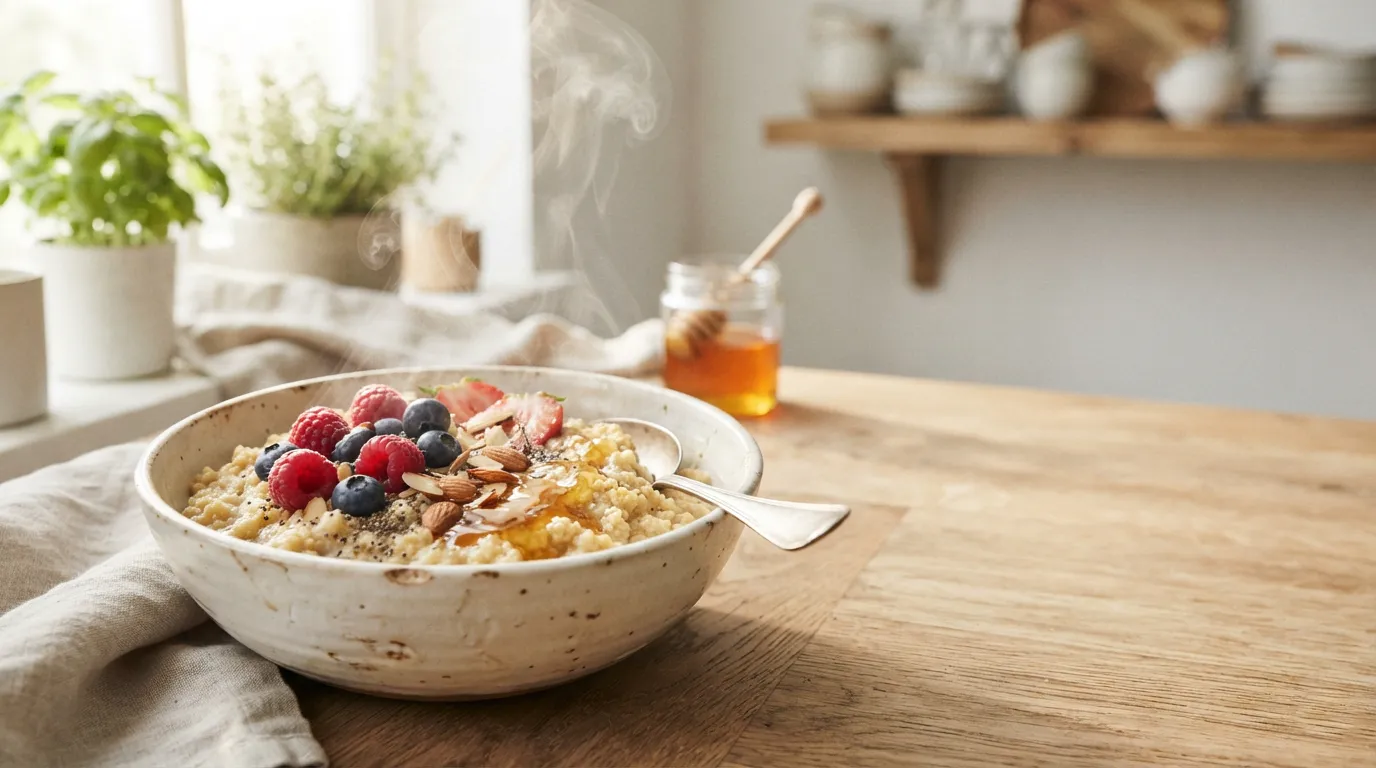
Simmered in water or milk at a roughly 2.5:1 liquid-to-millet ratio, millet cooks into a creamy porridge in about 20 minutes — a solid oatmeal alternative, especially sweetened with honey and topped with berries. Toasting the dry grains in a dry pan for a few minutes before adding liquid brings out a nuttier flavor, useful when using millet as a pilaf base instead of rice. It also works stirred into soups toward the end of cooking, where it thickens the broth slightly as it softens.
A more sustainable grain choice
Millet is notably drought-tolerant and needs far less water than rice or wheat, which is part of why it’s seeing renewed interest as a more sustainable grain choice. It matures quickly — 60 to 120 days depending on the variety — allowing multiple harvests in a single season in the right climate, and its deep root system helps prevent soil erosion in a way shallower-rooted crops don’t. For farmers in regions with unreliable rainfall, that resilience translates into a more dependable crop and, often, a second income stream alongside more water-intensive staples.
A few ways to use it
Beyond porridge, cooked millet works well tossed into a salad with roasted vegetables and a light dressing, or pressed into patties with herbs and spices for a simple veggie side. Millet flour can substitute for a portion of regular flour in muffins or flatbread, adding a slightly nutty flavor. Paired with lentils in a simple stew, it makes a filling, protein-complete meal on its own.
Types of millet
“Millet” actually covers several distinct grains grouped together for their similar growing habits. Pearl millet, the most widely grown globally, is a staple across parts of Africa and India. Foxtail millet, common in East Asian cooking, has a milder flavor and cooks slightly faster. Finger millet, notably high in calcium compared to other grains, is a staple in parts of East Africa and southern India, often ground into flour for flatbread. The differences matter mostly for sourcing and flavor — nutritionally they’re similar enough that most recipes calling for “millet” will work with whichever variety is available locally.
Buying and storing
Millet is sold hulled (the norm for cooking) in bulk bins or packaged, and it stores well — kept in an airtight container away from heat and light, it lasts up to a year without going rancid, longer than some other whole grains thanks to its low fat content. Millet flour, ground from the whole grain, spoils faster than the whole grain itself because grinding exposes more surface area to oxygen, so it’s worth buying in smaller quantities or storing it in the freezer if you don’t use it often. Rinsing millet before cooking isn’t strictly necessary the way it is for quinoa, but a quick rinse does remove any dust from processing and slightly improves the texture.
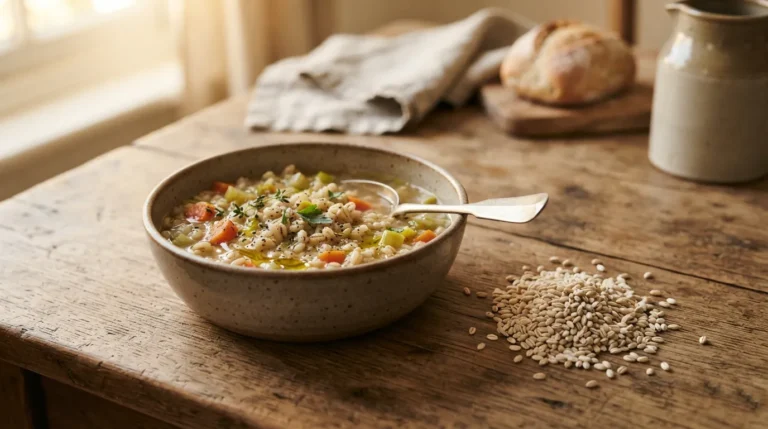
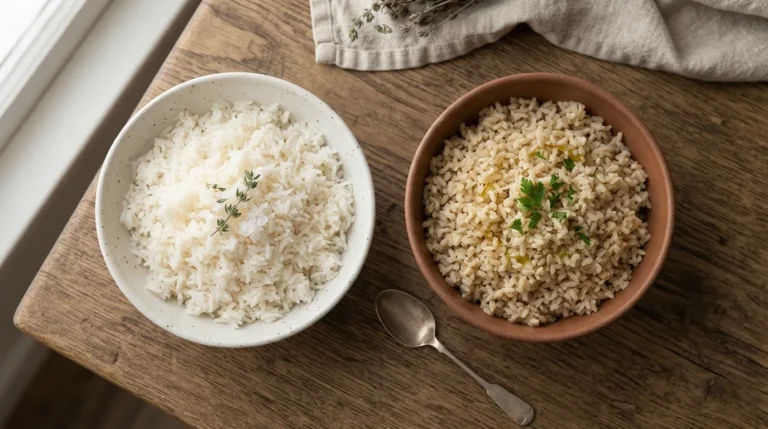
For related reading, see our pieces on rice and barley.
FAQ
Is millet a good grain for blood sugar management?
Yes. Millet has a low glycemic index, meaning it releases sugar slowly into the bloodstream, which can help keep blood sugar levels stable.
Why is millet considered good for sustainable farming?
It’s drought-resistant, grows in 60 to 120 days, and needs far less water than many other grains, making it a resilient crop choice.
How does millet’s fiber compare to other grains?
Millet has about 9 grams of fiber per 100 grams — more than brown rice, though less than barley.