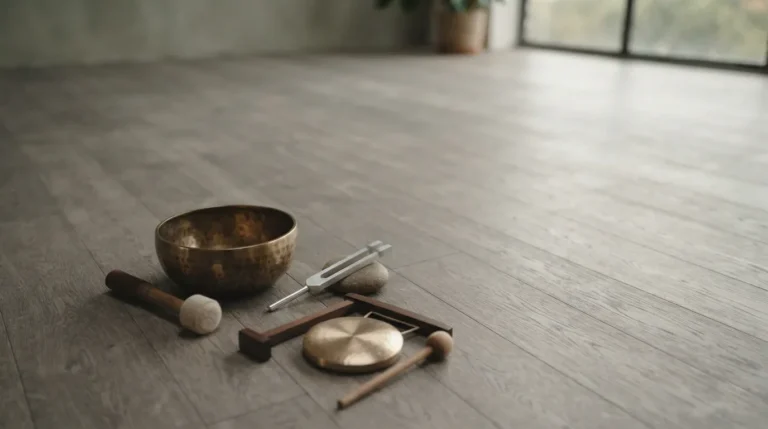


Sound healing uses tone and vibration — from singing bowls, gongs, tuning forks, or the human voice — to support relaxation and a sense of balance. It’s an old practice: chanting and music appear in healing rituals from ancient Egypt to Ayurvedic tradition, and it’s seeing renewed interest today as part of the broader move toward mind-body wellness practices.
The idea behind it
Every sound is a vibration, measured in Hertz (Hz) — how many times it cycles per second. Different frequency ranges are loosely associated in sound-healing practice with different mental states, similar to how brainwave states are categorized:
| Range | Associated state |
|---|---|
| 1–4 Hz | Deep sleep |
| 4–8 Hz | Light meditation, creativity |
| 8–12 Hz | Relaxed alertness |
| 12–30 Hz | Focus, active thinking |
A sound healing session — a “sound bath” — surrounds you with these tones, typically while lying down, aiming for the same kind of relaxation response as other mind-body practices like meditation.
What it can help with
The clearest, best-supported benefit of sound healing is relaxation itself: like other calming practices (meditation, slow breathing), immersing yourself in steady, ambient sound gives your nervous system a chance to downshift out of a stressed state. People commonly report feeling calmer, more present, and less tense after a session.
Claims beyond that — that specific frequencies “heal” specific ailments or repair the body at a cellular level — aren’t scientifically supported, and we won’t repeat them here. The practice is worth doing for what it reliably offers: a structured way to slow down and relax.
Getting started
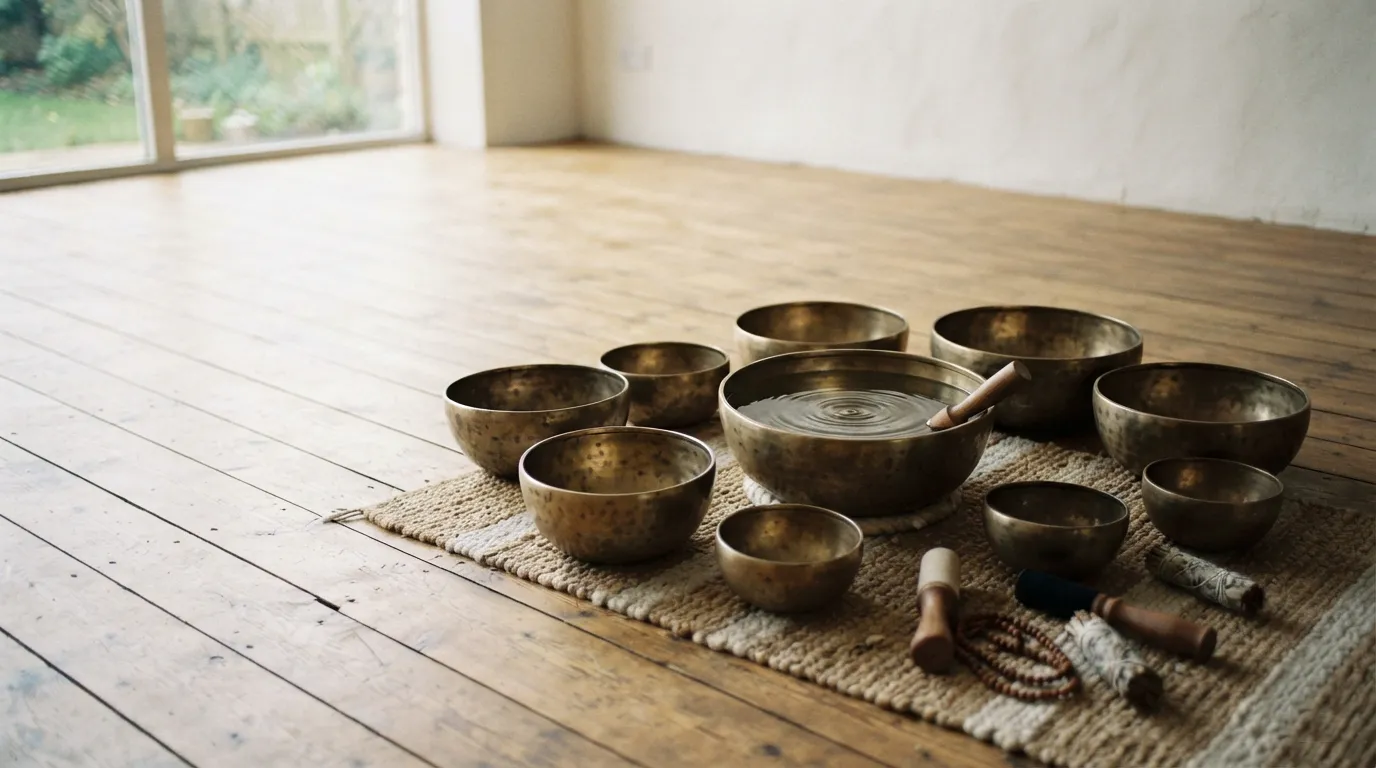
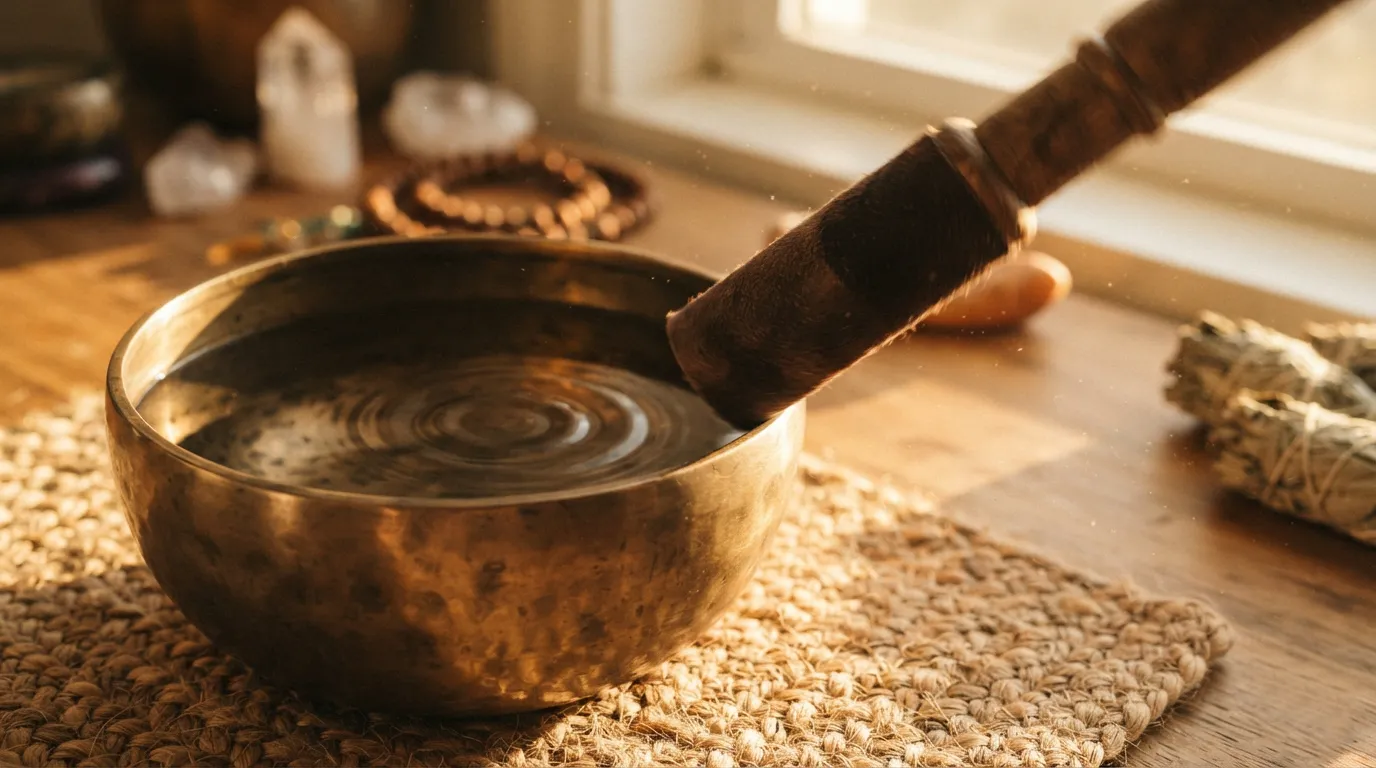
You don’t need special equipment to try it. A guided sound bath recording, a singing bowl, or even ambient nature sounds can serve the same purpose — the goal is simply giving yourself dedicated time to be still and listen.
You might also find our pieces on sound healing instruments and sound healing frequencies useful.
FAQ
What frequency range is associated with light meditation in sound healing practice?
Roughly 4-8 Hz is loosely associated with light meditation and creativity, similar to categorized brainwave states.
What’s the best-supported benefit of sound healing?
Relaxation itself — immersing yourself in steady, ambient sound gives your nervous system a chance to downshift out of a stressed state, similar to other calming practices.
Do I need special equipment to try sound healing?
No — a guided sound bath recording, a singing bowl, or even ambient nature sounds can serve the same purpose of giving yourself dedicated time to be still and listen.