

Different sound healing instruments do genuinely different things — not in a mystical sense, just acoustically. A gong and a tuning fork produce completely different experiences, and knowing the difference helps you pick the right tool instead of assuming they’re interchangeable.
Sound healing instruments: singing bowls
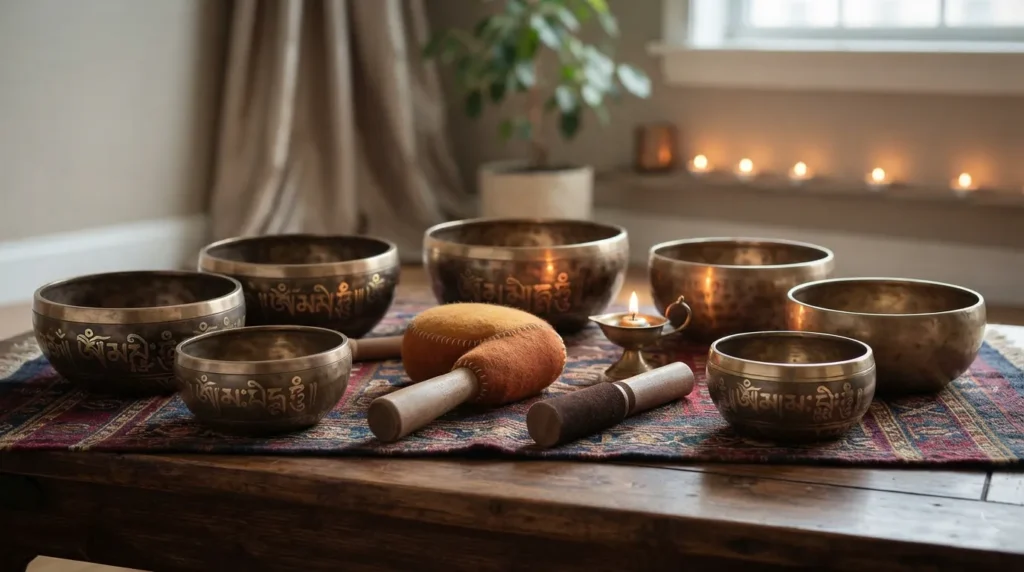
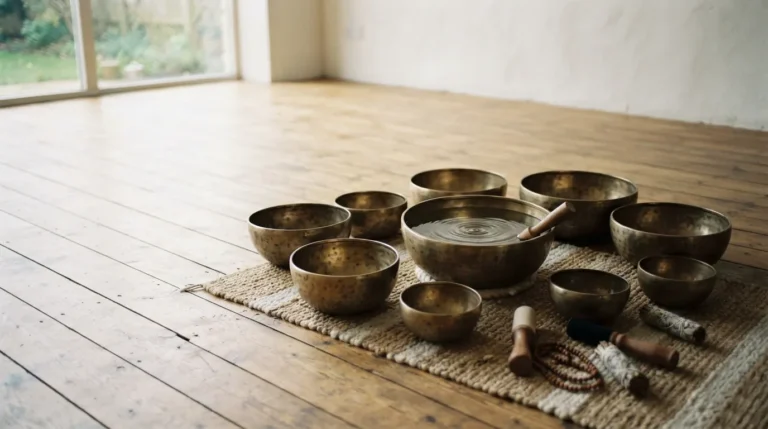
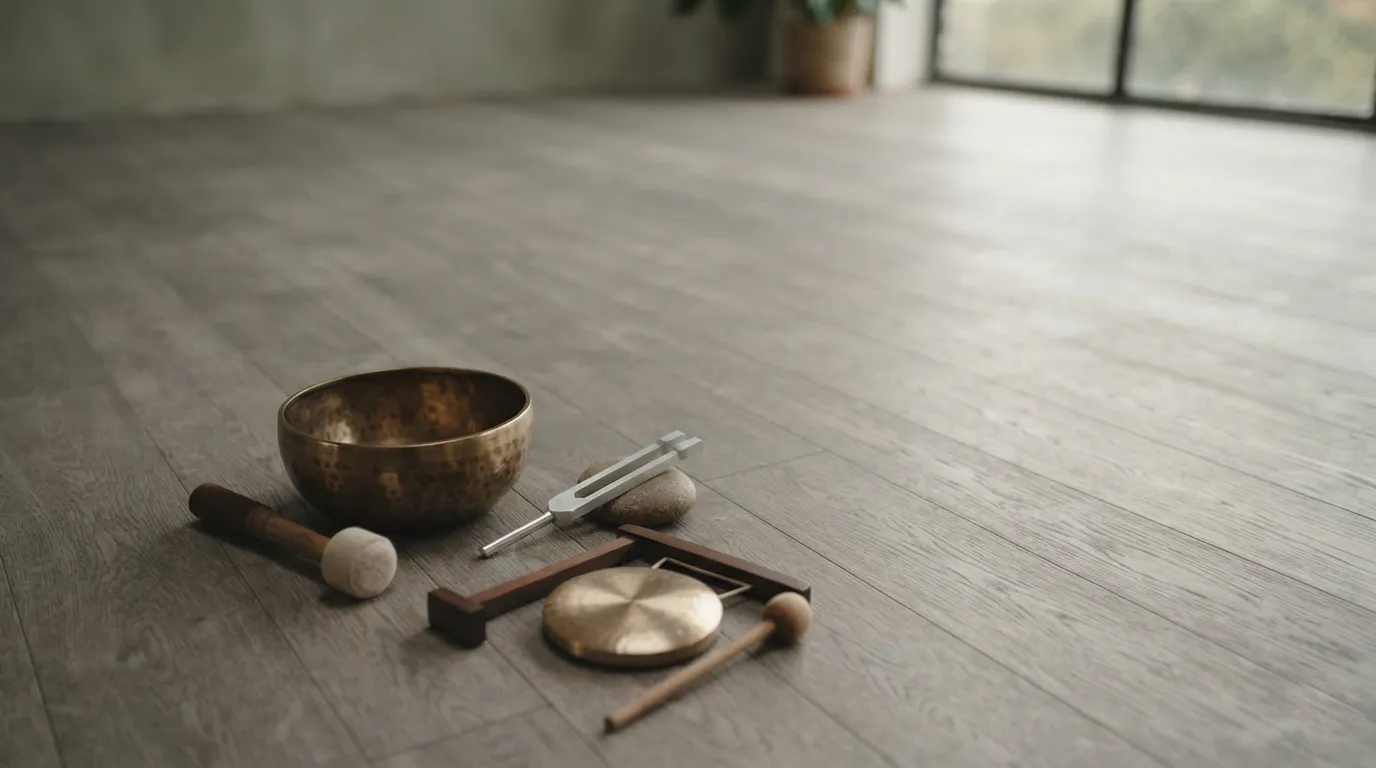
Usually metal alloy, played by circling a mallet around the rim to produce a sustained, resonant tone. They’re the most common entry point into sound healing — easy to use solo, widely available, and gentle enough for daily practice.
Tuning forks
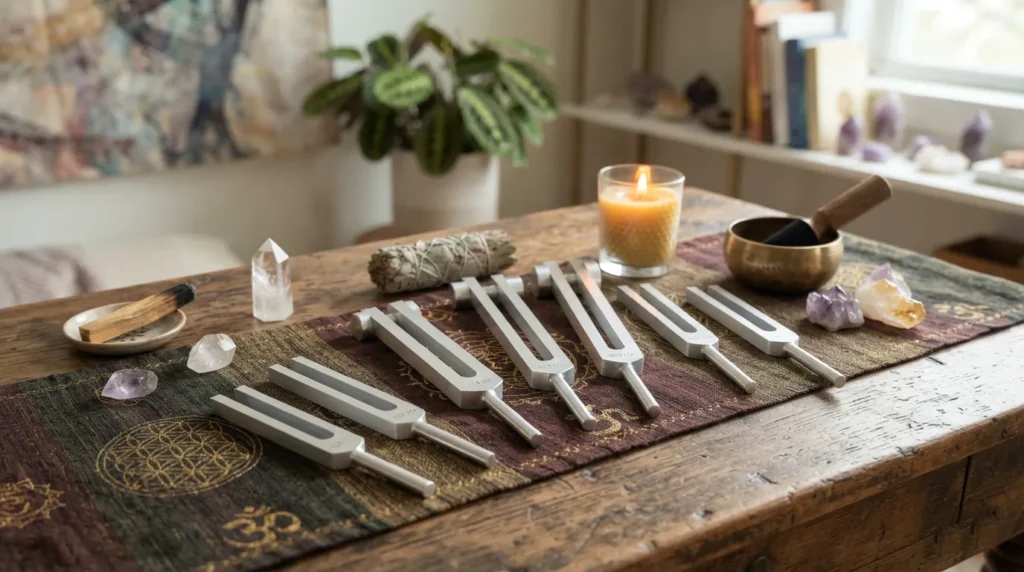
Struck and then held near or on the body, tuning forks are more targeted than bowls — practitioners often use specific frequencies for specific areas, similar to how acupressure targets specific points. They’re precise where bowls are ambient.
Gongs
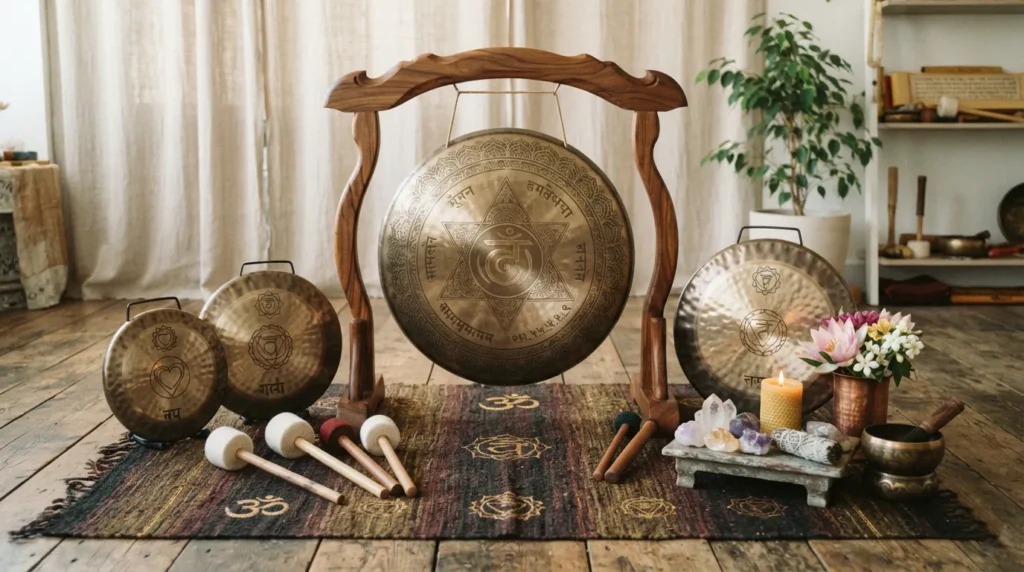
The most intense of the three, gongs produce a wide, layered wash of sound that’s harder to ignore than a bowl’s single tone. They’re typically used in group settings — a solo gong session is possible, but most of what makes gongs effective is the sheer volume and complexity, which works best filling a room.
Which one to start with
A singing bowl is the practical answer for anyone starting at home — affordable, quiet enough for an apartment, and simple enough to use without training. Tuning forks and gongs are worth exploring once you’ve got a sense of whether sound-based practice actually appeals to you.
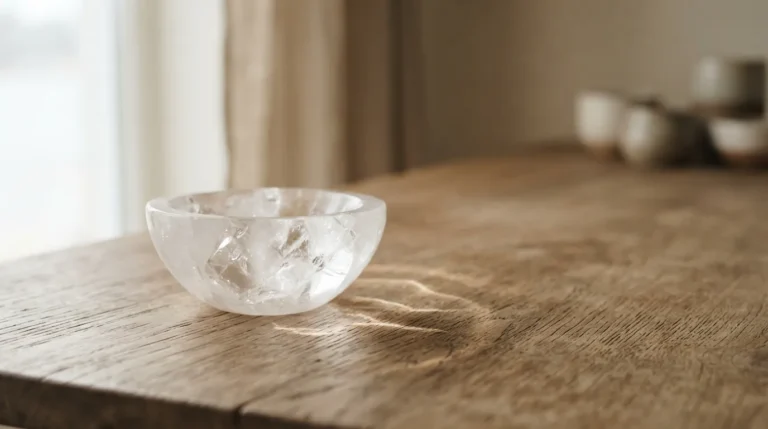
For more along these lines, check out our pieces on crystal bowl sound healing and how sound healing works.