

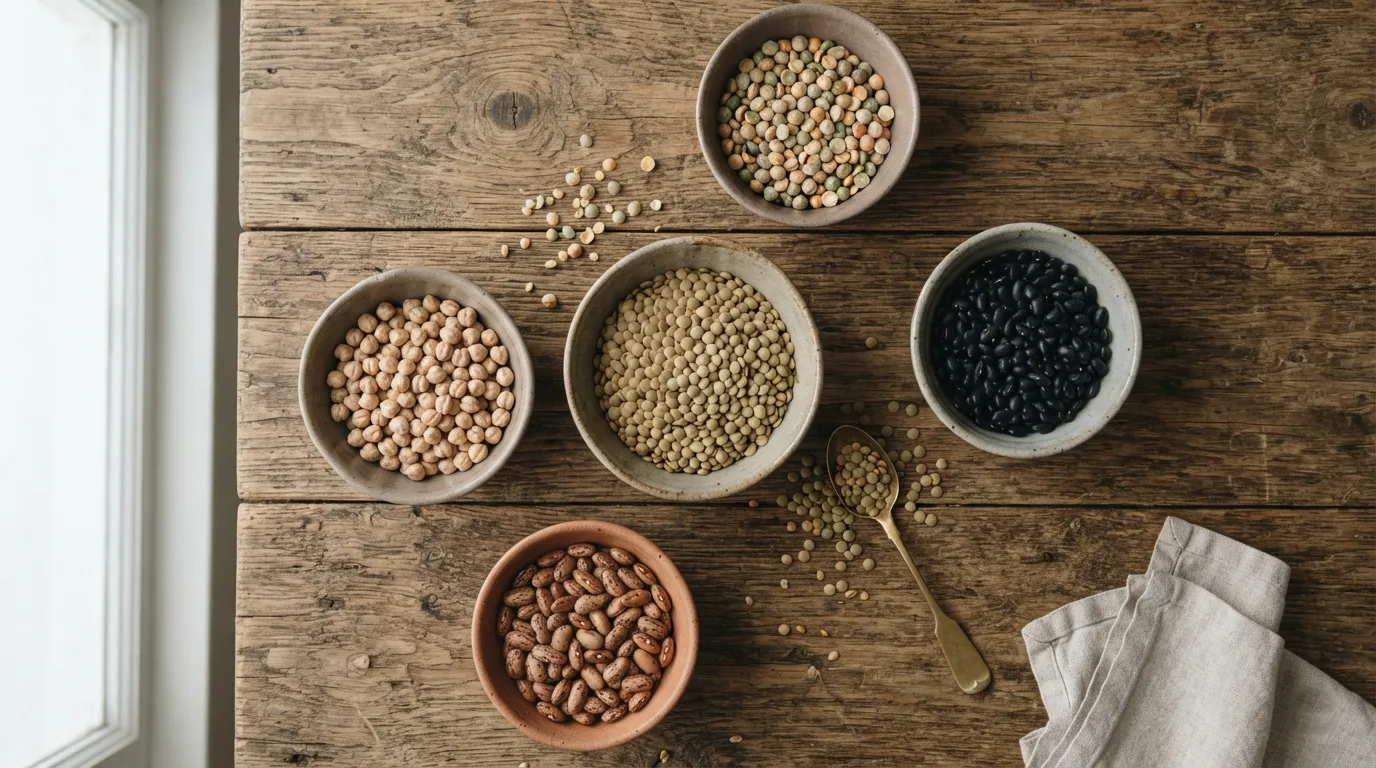

Lentils, chickpeas, black beans, kidney beans, peas — legumes have been a dietary staple across cultures for thousands of years, and it’s not hard to see why. They’re cheap, keep well, and pack an unusual amount of nutrition into a small serving, whether you’re building a meal around them directly or using them to round one out.
What’s actually in them
Per 100 grams, legumes deliver a rare combination: high protein and high fiber, both while staying low in fat. Lentils provide about 9 grams of protein and 8 grams of fiber; chickpeas and black beans land in a similar range, each providing close to 9 grams of protein and 7-9 grams of fiber. They’re also a solid source of folate and iron, though the iron is less readily absorbed than the iron in meat — worth knowing if legumes are a main iron source in your diet.
Why they’re worth eating regularly
That fiber feeds beneficial gut bacteria and helps keep digestion running smoothly. Paired with the protein content, it also keeps you full longer than most plant foods — useful for managing weight without counting every calorie. Legumes bring potassium and magnesium too, which support healthy blood pressure and are part of why regular legume eaters tend to show lower rates of heart disease in observational studies.

Cooking basics
Soak dried legumes overnight — lentils and split peas are the exception, they cook fine without it. Rinse after soaking to wash away some of the compounds that cause bloating, then simmer until tender. Lentils take about 15 to 20 minutes with no soaking needed; chickpeas and kidney beans need roughly 8 hours of soaking followed by 1 to 1.5 hours of cooking; black beans follow a similar timeline. A pressure cooker cuts most of these times roughly in half. Cooking legumes in broth instead of plain water, with a bay leaf or a few cloves of garlic added to the pot, makes a noticeable difference in flavor for very little extra effort.
A few ways to use them
Lentil soup with root vegetables and a well-seasoned broth is about as forgiving a recipe as exists — it’s hard to get wrong. A chickpea salad with chopped tomato, cucumber, and a lemon-olive oil dressing works as a light lunch on its own. Black beans, warmed and seasoned with cumin and lime, make a solid taco filling alongside avocado and fresh cilantro. And blended chickpeas with tahini, garlic, and lemon juice is, of course, hummus — worth making from scratch at least once, since the texture beats most store-bought versions.
What to watch for
Legumes contain phytates and lectins, compounds that can reduce how well your body absorbs iron, zinc, and calcium — soaking and boiling neutralizes most of this, which is part of why the extra prep step matters. If you have a peanut allergy, introduce other legumes slowly and watch for a reaction, since peanuts are technically a legume too. A reasonable target is 1 to 1.5 cups of legumes per week, mixed in with other protein and fiber sources rather than relied on alone.
Buying and storing
Canned legumes are a reasonable shortcut — rinsing them under water cuts a meaningful chunk of the added sodium, often by close to half. Dried legumes cost less per serving and let you control sodium entirely, at the tradeoff of needing to plan ahead for soaking. Store dried legumes in an airtight container somewhere cool and dark, where they’ll keep well over a year, though older beans take noticeably longer to soften and are worth rotating out. Cooked legumes freeze well too — portioning them into a cup or two per bag makes future soups and salads faster to put together.
Related reading: our articles on grains and barley.
FAQ
How much fiber do legumes provide?
Legumes are a strong source of fiber — lentils and black beans each provide around 8 grams per 100 grams, which supports digestion and feeds beneficial gut bacteria.
What are antinutrients in legumes, and should I worry about them?
Compounds like phytates and lectins can reduce mineral absorption, but soaking and boiling legumes before eating removes most of them.
How many legumes should I eat per week?
A reasonable target is about 1 to 1.5 cups per week, mixed in with other nutrient-rich foods rather than relied on alone.