

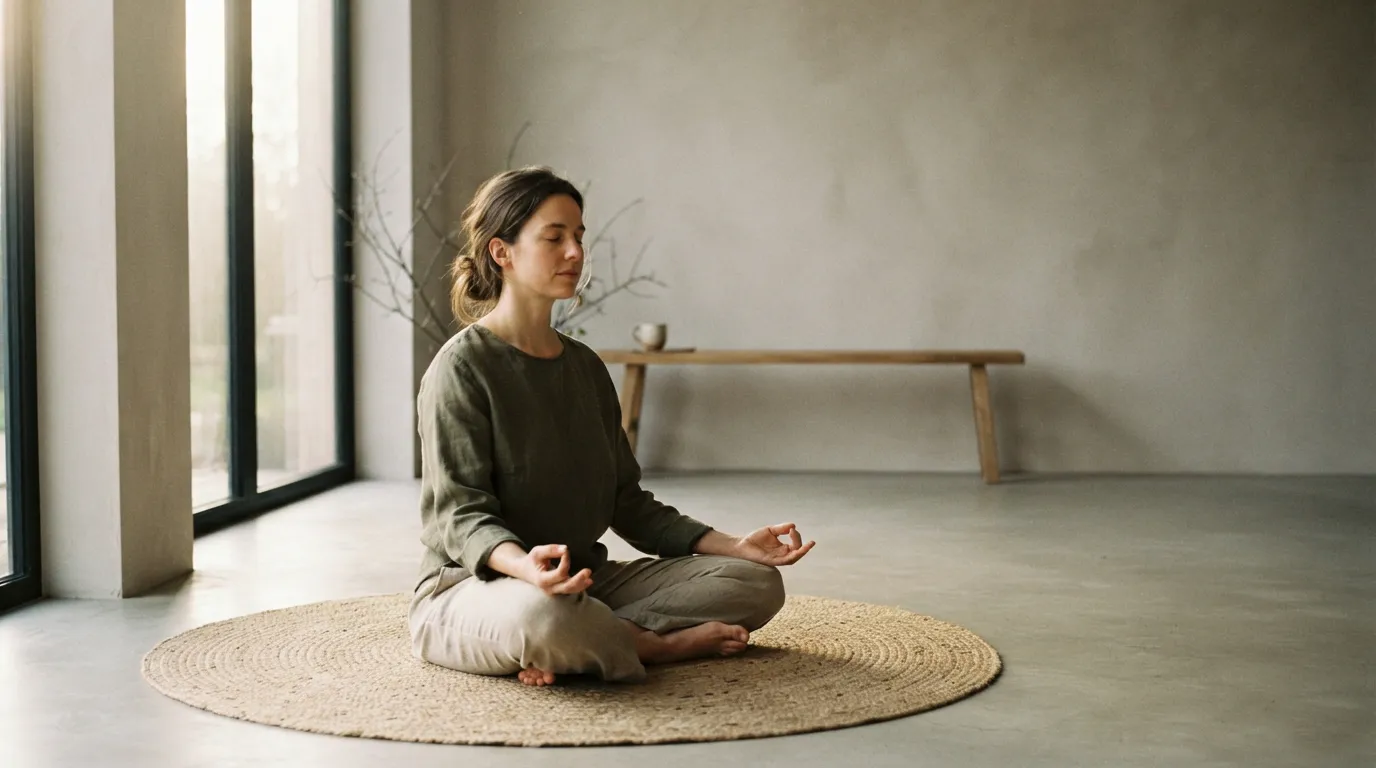

Transcendental Meditation asks less of you than most meditation styles, which is part of why it’s stuck around since the 1960s. Sit, close your eyes, repeat a mantra silently for 15 to 20 minutes, twice a day. No visualization, no specific breathing pattern to manage — just the mantra, and letting everything else happen on its own.
What it’s supposed to do
Regular practitioners report lower stress, better sleep, and sharper focus — broadly consistent with what’s been found for meditation practices in general, though TM-specific research is more limited and mixed than proponents sometimes suggest. Some studies have found modest blood pressure benefits as well.
Setting up a session
A quiet room, a comfortable seat, and minimal interruptions are the actual requirements — the candles and crystals some guides recommend are optional atmosphere, not the mechanism. Pick a mantra (a word or sound repeated silently) and stick with it session to session rather than switching every time.

Dealing with a wandering mind
Your mind will drift. That’s not a failure state — it’s what minds do. The instruction is simply to notice when it’s happened and return to the mantra, without judging yourself for wandering in the first place. Over weeks, this gets easier, not because your mind stops wandering but because you stop being bothered by it.
Making it a routine
Morning and evening sessions are the traditional structure, bookending the day rather than trying to squeeze meditation into a random gap. If twice daily isn’t realistic, one consistent session still beats an inconsistent two — consistency is what makes the practice compound over time.
You might also find our pieces on Zen meditation and Vipassana meditation useful.
FAQ
How is Transcendental Meditation different from other meditation styles?
TM involves silently repeating a mantra for 15 to 20 minutes, twice a day, without visualization or a specific breathing pattern to manage.
What does the research say about TM’s benefits?
Regular practitioners report lower stress, better sleep, and sharper focus, broadly consistent with meditation research generally, though TM-specific studies are more limited and mixed.
What’s the traditional TM session structure?
Morning and evening sessions bookending the day are the traditional structure, though one consistent daily session still beats an inconsistent two.