

In Ayurveda, food isn’t just fuel — it carries a quality, or guna, that shapes how you feel after eating it. Tamasic foods sit at the heavy end of that spectrum: dense, dulling, associated with lethargy rather than vitality. Knowing what falls into this category — and how to balance it rather than eliminate it outright — is more useful than treating it as a forbidden list.
What makes a food tamasic
Traditionally, three traits tend to show up together:
- Heavy or hard to digest — fried food, excess animal fat, very rich dishes
- Stale or over-processed — leftovers well past their prime, refined flour, anything built more from additives than ingredients
- Dulling in effect — food that leaves you wanting to lie down rather than move
Common examples
| Category | Examples |
|---|---|
| Processed & packaged | Chips, packaged snacks, sugary cereals, instant noodles, soft drinks |
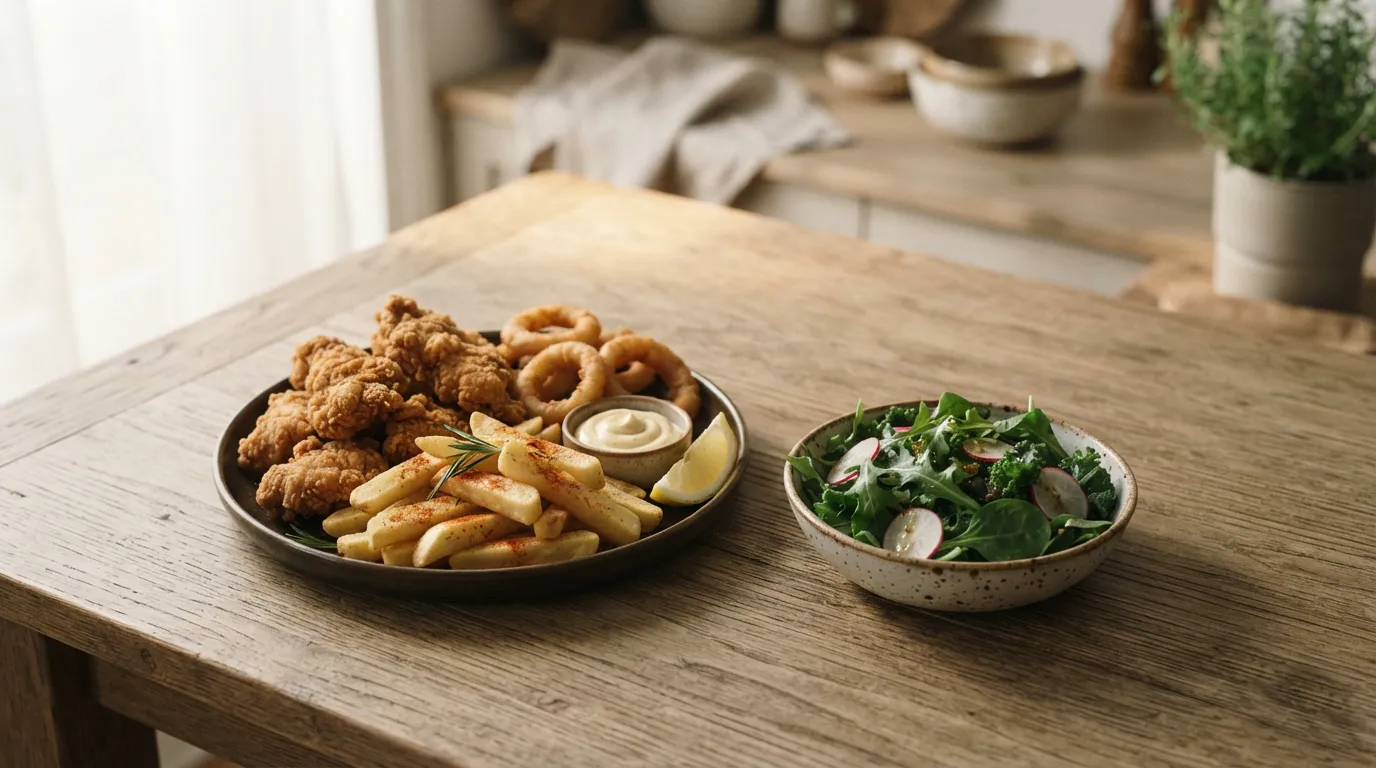
| Fried & heavy | Fried chicken, doughnuts, cheese fries, deep-fried anything |
| Stale or reheated | Leftovers past their prime, day-old takeout |
| Excess sugar or alcohol | Candy, pastries, soda, alcohol |
How it’s said to affect you
Ayurvedic tradition links a tamasic-heavy diet to digestive sluggishness, mental fog, and low motivation — the “food coma” feeling, taken as a recurring pattern rather than a one-off. This is a traditional framework for noticing how food affects you, not a clinical diagnosis or a claim backed by lab data — treat it as a lens, not a medical fact.
Balancing, not eliminating
The Ayurvedic approach isn’t to cut tamasic food out completely — it’s to balance it against the other two qualities:
- Sattvic (fresh, light, energizing): fruit, vegetables, whole grains, legumes
- Rajasic (stimulating, activating): spices, nuts, seeds, coffee
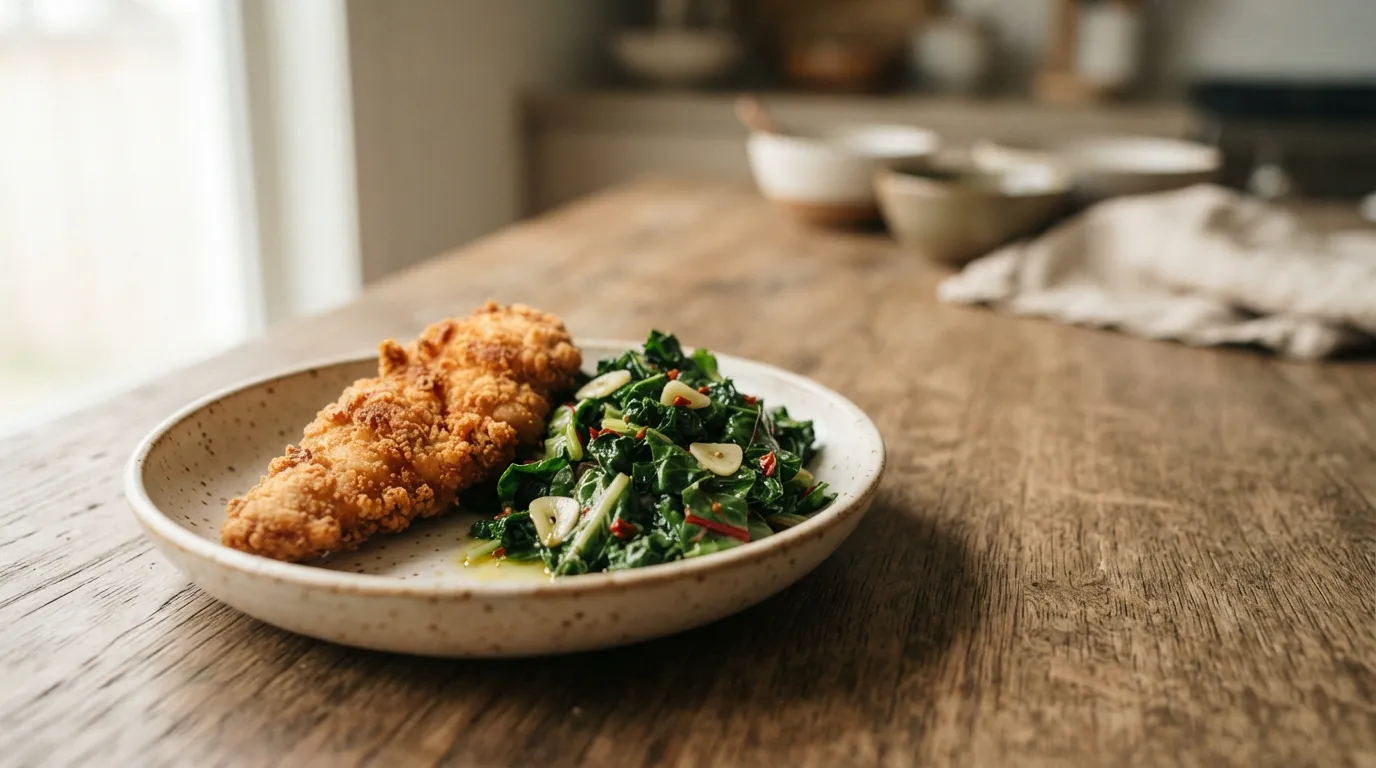
A simple shift: pair a heavier tamasic dish with something fresh rather than eating it alone — sautéed greens next to fried food, fresh herbs and lemon on leftovers, a handful of nuts instead of a second helping of chips.
Making the switch, gradually
You don’t need an overnight overhaul. A few sustainable habits:
- Load up on fresh produce. Spinach, berries, cucumbers, apples — easy additions that lighten a heavier plate.
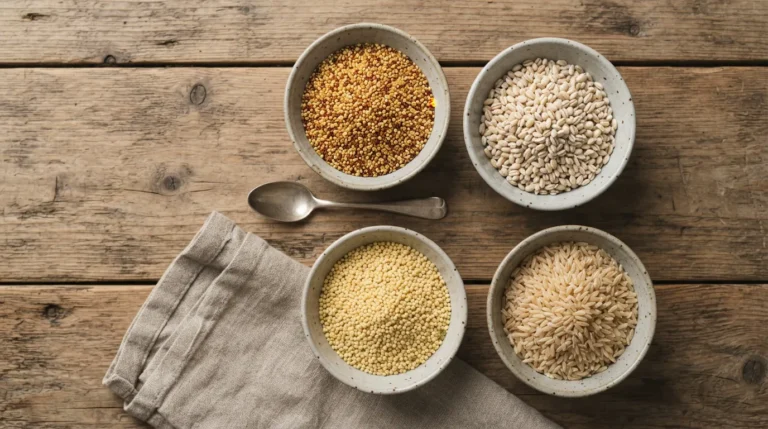
- Choose whole grains over refined ones. Quinoa, brown rice, barley, and lentils bring steady energy and fiber that processed carbs don’t.
- Cook and eat with a bit more intention. Fresh herbs and spices over heavy sauces; slower meals over rushed ones; a calmer environment when you can manage it.
Notice the pattern first
Rather than judging any single meal, try tracking for a week: after a heavier, more processed meal, how do you actually feel an hour later — versus after a lighter, fresher one? That contrast is the whole practice. Awareness first, adjustment second.
If this topic interests you, our articles on rajasic diet and sattvic diet cover related ground.
FAQ
What makes a food tamasic?
Tamasic foods tend to share three traits: heavy or hard to digest, stale or over-processed, and dulling in effect — the kind of meal that leaves you wanting to lie down rather than move.
Should I cut tamasic foods out completely?
Not necessarily. Ayurvedic tradition favors balancing tamasic foods against sattvic and rajasic ones rather than eliminating them outright — for example, pairing a heavier dish with something fresh.
What are some common examples of tamasic foods?
Fried and heavily processed foods, stale leftovers, refined flour products, and foods high in added sugar or alcohol are the most commonly cited examples.