


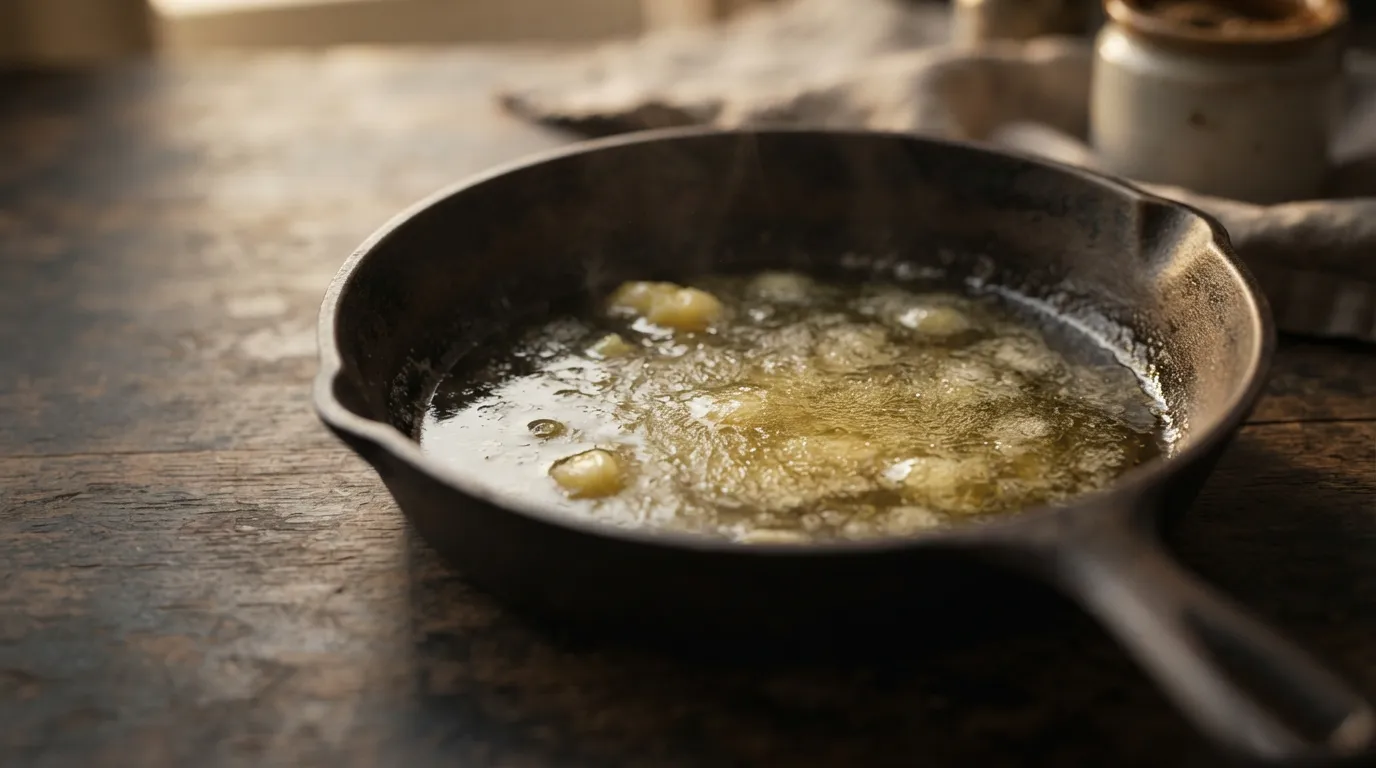
Ghee is clarified butter, made by simmering butter until the milk solids separate and can be skimmed off, leaving a golden, shelf-stable fat with a nutty flavor and a high smoke point. It’s been a staple in South Asian cooking and Ayurvedic medicine for thousands of years, used for both everyday cooking and ceremonial purposes.
What’s in it
Per tablespoon (14 grams), ghee provides about 112 calories, 12.7 grams of total fat, and a meaningful dose of vitamin A — around 2,000 IU. It’s largely saturated fat, but it also carries butyrate, a short-chain fatty acid with anti-inflammatory properties tied specifically to gut health.
Why people use it
Ghee is naturally lactose-free since the milk solids are removed during preparation, which makes it a reasonable dairy-derived fat for people with lactose intolerance. The butyrate content is a preferred fuel source for the cells lining the colon, which is part of the gut-health case for it. Some research also points to modest improvements in HDL (“good”) cholesterol when ghee replaces less healthy fats — though that’s not a free pass given its overall saturated fat content.
Ghee and the doshas
In Ayurveda, ghee is classified as a sattvic food — considered calming and clarifying rather than stimulating or dulling — and it’s used somewhat differently depending on a person’s dosha, the Ayurvedic framework of three constitutional types. For Vata types, prone to dryness, ghee is used to add moisture and grounding. For Pitta types, associated with heat and intensity, its cooling quality is meant to balance things out. For Kapha types, already prone to heaviness, ghee is used more sparingly, sometimes infused with warming spices like ginger or black pepper to offset it. None of this requires buying into the dosha framework to notice that ghee, used thoughtfully, tends to sit well across a range of dishes and appetites.
Cooking with it
Ghee has a smoke point around 450°F (232°C), high enough for frying, roasting, and sautéing without breaking down the way butter does at high heat. It pairs particularly well with rice and other grains, where a spoonful stirred in at the end adds richness without overwhelming the dish. A finishing drizzle over roasted vegetables, especially root vegetables like carrots and sweet potatoes, brings out their natural sweetness. It also works well infused — warming ghee gently with turmeric, cumin, or fresh ginger for a few minutes before using it layers in extra flavor.
How much, and what to look for
A reasonable daily amount is 1 to 2 tablespoons, used in place of other cooking fats rather than added on top of them. When buying, grass-fed ghee tends to have a richer golden color and higher omega-3 content than conventional versions — look for a smooth texture and a nutty smell, not anything sour or off. Stored in a sealed container away from direct heat, it keeps at room temperature for months without needing refrigeration, which is part of its practical appeal alongside the flavor.
Ghee vs. other cooking fats
Compared to regular butter, ghee’s main advantage is the higher smoke point and longer shelf life, since removing the milk solids is what causes butter to burn and spoil faster. Compared to olive oil, ghee holds up better under high heat but lacks olive oil’s monounsaturated fat profile, which is why many kitchens use both for different purposes — olive oil for dressings and lower-heat cooking, ghee for searing and roasting. Coconut oil is the closer comparison in terms of saturated fat content and heat stability, though ghee has a more neutral, savory flavor where coconut oil carries a distinct sweetness that doesn’t suit every dish.
Related reading: our articles on turmeric and honey.
FAQ
Is ghee suitable for people who are lactose intolerant?
Yes. Ghee has the milk solids removed during preparation, which makes it naturally lactose-free and generally well tolerated by people with lactose intolerance.
How much ghee should I eat per day?
Most guidance suggests sticking to about 1 to 2 tablespoons a day rather than using it freely.
What temperature can ghee handle when cooking?
Ghee has a high smoke point, around 450u00b0F (232u00b0C), which makes it suitable for frying, sautu00e9ing, and roasting without burning easily.