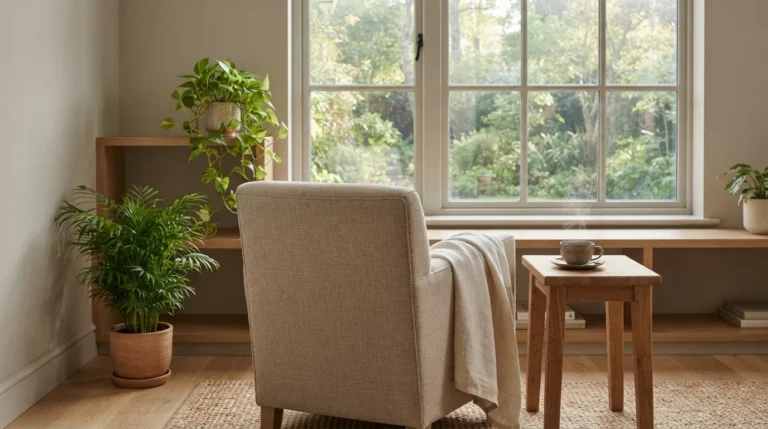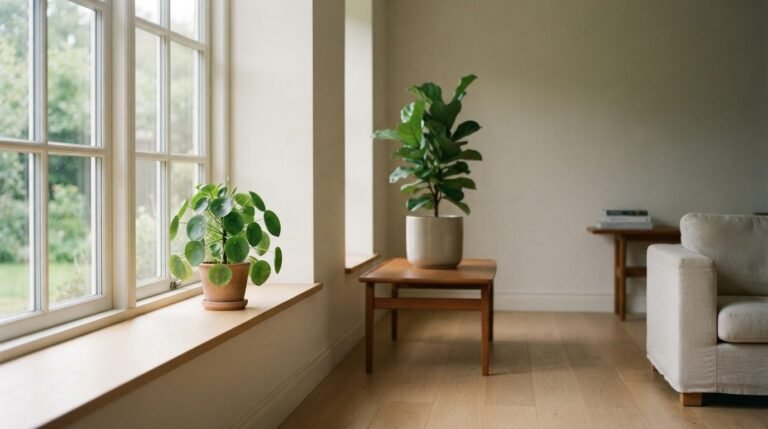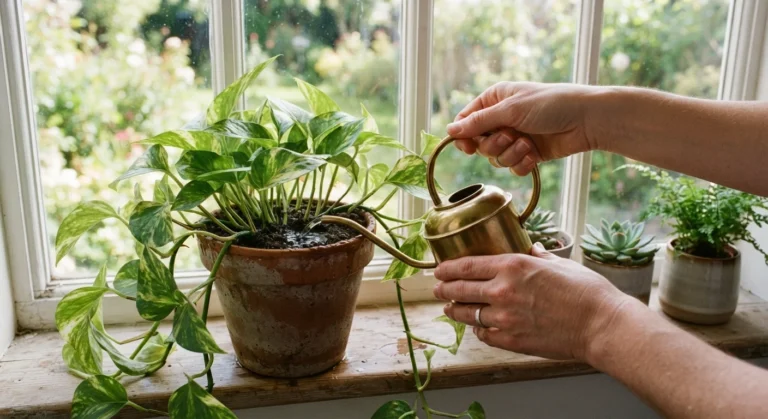


The label said “perfect for low light”, so you put the peace lily in the bedroom with the north-facing window. Three months later it’s drooping, it hasn’t flowered, and the soil never seems right. The label wasn’t exactly lying. Plenty of plants sold as low light indoor plants will survive a dim room for a while. Far fewer actually do well there.
The difference matters, because a plant that’s slowly declining is no pleasure to live with.
What “low light” really means
On the scale we use across this series, low light is roughly 500 to 2,500 lux. Below about 500 lux, a spot is too dark for most plants in the long run. If you haven’t measured your rooms before, our guide to how much light indoor plants need explains the numbers.
Within that band there’s a big gap between surviving and growing. The University of Georgia gives its toughest low-light plants about 270–810 lux as a bare minimum, but about 810–2,150 lux for good growth (UGA Extension). At the bottom of the band, even the best low-light plants mostly hold steady.
Offices are often dimmer than people expect. A room lit only by ceiling tubes is frequently around 430 lux or less (UF/IFAS Extension), which puts the typical desk in the too-dark band.
Low light indoor plants that genuinely cope
These are the plants that the University of Georgia’s houseplant guide rates down to its lowest light level, plus the ZZ plant, which NC State Extension says “tolerates deep shade” (UGA Extension; NC State Extension):
| Plant | Light range it handles | Watering | Safe for cats and dogs? |
|---|---|---|---|
| ZZ plant (Zamioculcas zamiifolia) | Deep shade to bright indirect | Let it dry out; about monthly in winter | No (NC State Extension) |
| Snake plant (Dracaena trifasciata) | Bright to low | Let it dry out; every 1–2 months in winter | No (ASPCA) |
| Cast iron plant (Aspidistra elatior) | Medium to low | Let the surface dry first | Yes (ASPCA) |
| Parlor palm (Chamaedorea elegans) | Medium to low | Let the surface dry first | Yes (ASPCA) |
| Pothos (Epipremnum aureum) | Bright to low | Let the surface dry first | No (ASPCA) |
| Heartleaf philodendron (Philodendron hederaceum) | Bright to low | Let the surface dry first | No (ASPCA) |
| Chinese evergreen (Aglaonema) | Medium to low | Let the surface dry first | No (ASPCA) |
| Dracaena ‘Janet Craig’ and ‘Warneckii’ | Bright to low | Let the surface dry first | No (ASPCA) |
ZZ plant
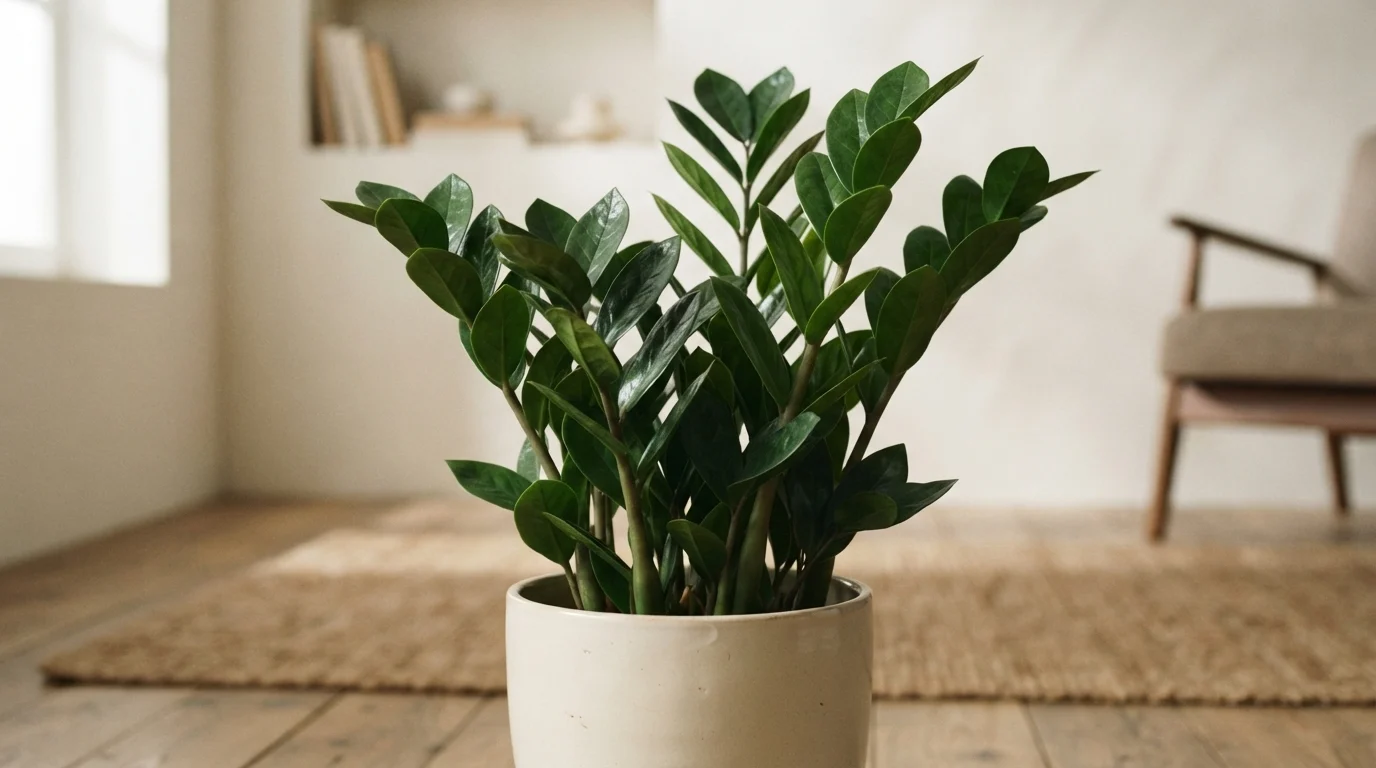
If you want one plant for a dim corner, start here. The ZZ plant has thick, glossy leaves on upright stems, grows slowly to around 60 cm to 1.2 m, and NC State notes it can survive very low light, “including fluorescent light” (NC State Extension). Its weak spot is water. It stores moisture in its roots, and “wet feet are not tolerated”, so wait until the soil is dry all the way through. Keep it out of hot direct sun, which can scorch the leaves.
Snake plant
Stiff, upright, sword-shaped leaves that can reach over a metre, and about as hard to kill as a houseplant gets (NC State Extension). It tolerates low light and low humidity, and in winter it needs water only every month or two. Overwatering is how most people kill one: NC State warns plainly that the roots will rot.
Cast iron plant and parlor palm
These two are the best choice for homes with pets, because both reach the lowest light rating and both are listed as non-toxic by the ASPCA. The cast iron plant has broad, dark green leaves and lives up to its name. The parlor palm brings softer, feathery fronds. The University of Georgia notes that cast iron plants grow better in cooler rooms, around 22°C, so a slightly chilly bedroom suits it (UGA Extension).
Pothos and heartleaf philodendron
Both are trailing plants that look good spilling from a shelf, and both cope with low light, though they grow faster and fuller with more. In a dim spot, expect longer gaps between leaves and smaller new growth. Both are toxic to cats and dogs, so a high shelf is the right home for them in a pet household.
Chinese evergreen and dracaena
Chinese evergreens have patterned leaves in silver and green, and they genuinely prefer shade: the University of Georgia’s guide shows one with bleached, scorched leaves from too much light. Keep them above about 10°C. Dracaena ‘Janet Craig’ and ‘Warneckii’ give you height in a dim corner, with long strap-shaped leaves on a cane.
Popular “low light” plants that need more than you think
Several plants regularly sold as low light are rated medium-to-high by the University of Georgia (UGA Extension):
- Peace lily, which also needs plenty of water and suits being kept evenly moist
- Spider plant
- Boston fern
- Prayer plant and calathea
All of them will live in a dim room for a while, which is probably where the reputation comes from. They just won’t look their best. If you love one of these, give it the brightest spot you have, a metre or so from a window, rather than the gloomiest.
Best plants for a bedroom
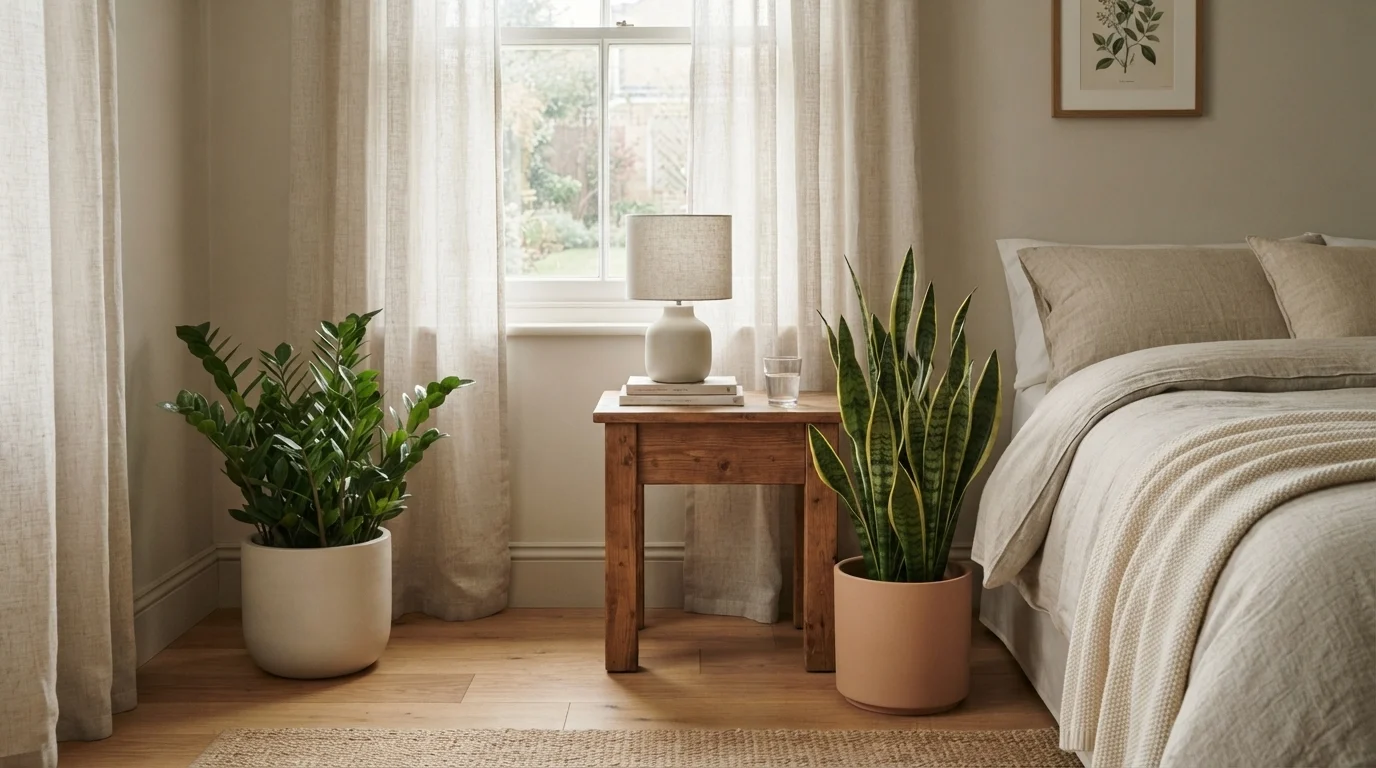
Choose a bedroom plant for being easy to live with. A bedroom is often the dimmest room in the house, and it’s the one you think about least during the day. The snake plant, ZZ plant and cast iron plant all handle low light, dry air and occasional forgetfulness.
You’ll often read that the snake plant is the perfect bedroom plant because it releases oxygen at night. It does use a night-time form of photosynthesis, taking in carbon dioxide after dark (Borland et al. 2011). But a greenhouse study that measured this concluded that recommending snake plants for night-time oxygen in a bedroom doesn’t hold up (arXiv 2022). That study hasn’t been peer reviewed yet, but it matches what’s known about houseplants and room air generally, which we covered in indoor plants and wellbeing.
The opposite worry is just as unfounded. Plants do release a little carbon dioxide at night, but far too little to matter. In a 2024 study, even 18 plants in an office made no measurable difference to carbon dioxide levels (Jiang et al. 2024).
Nobody has properly studied whether bedroom plants help you sleep, so we won’t claim they do. For what does help, our ten ways to achieve restorative sleep is a better place to start.
Desk plants for office lighting
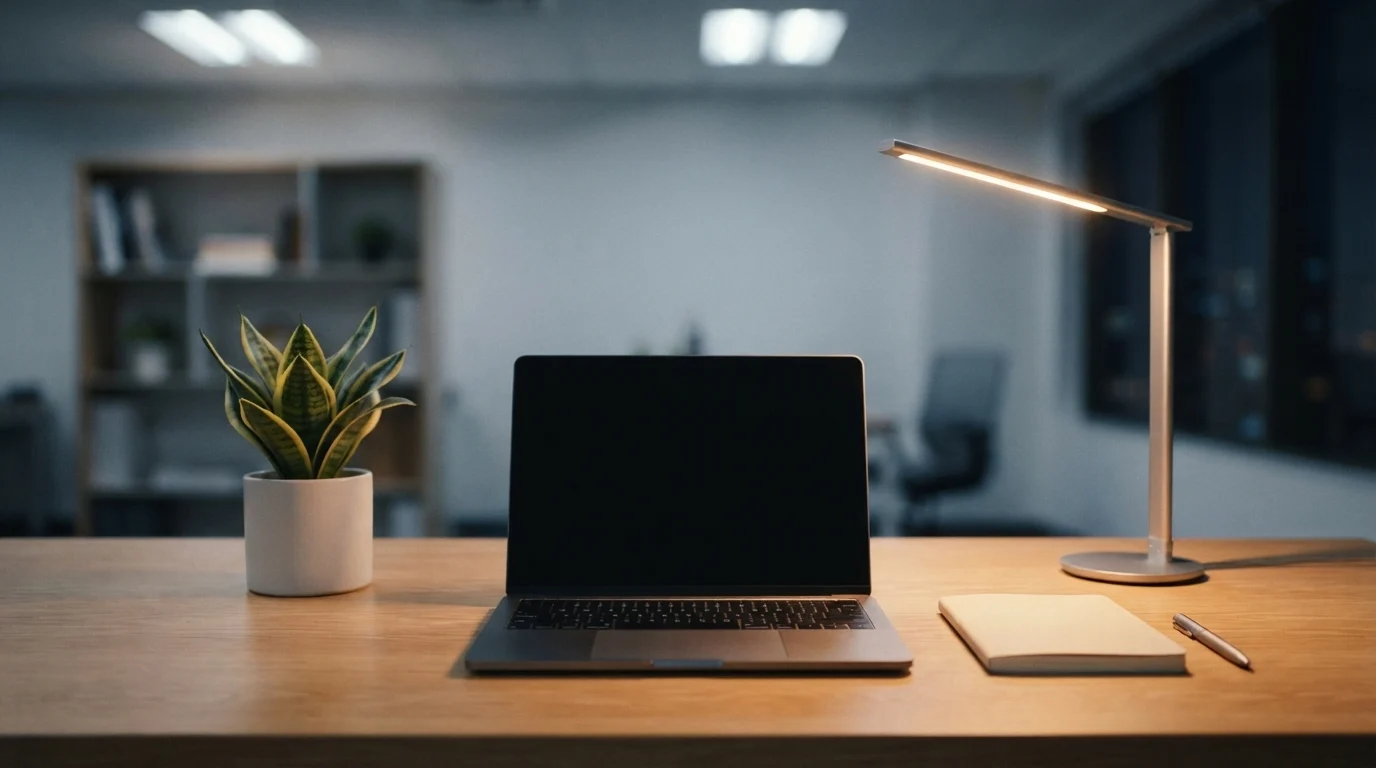
Ceiling lights alone usually leave a desk below the low-light band, so only the toughest plants manage. The ZZ plant is the safest choice, followed by snake plant and pothos.
A small desk lamp or LED grow light changes the picture. The University of Florida notes that plants can grow entirely under artificial light if it’s bright enough and on long enough, generally eight hours or more (UF/IFAS Extension). The University of Georgia adds that a longer light period can make up for weaker light (UGA Extension). If your office lights go off at night and over weekends, a lamp on a timer fills the gap.
It’s worth measuring your desk before you buy anything. LumiLeaf turns your phone into a simple plant light meter and tells you which band the spot falls into. It’s our own app, so weigh the recommendation accordingly.
Pet safe low light plants
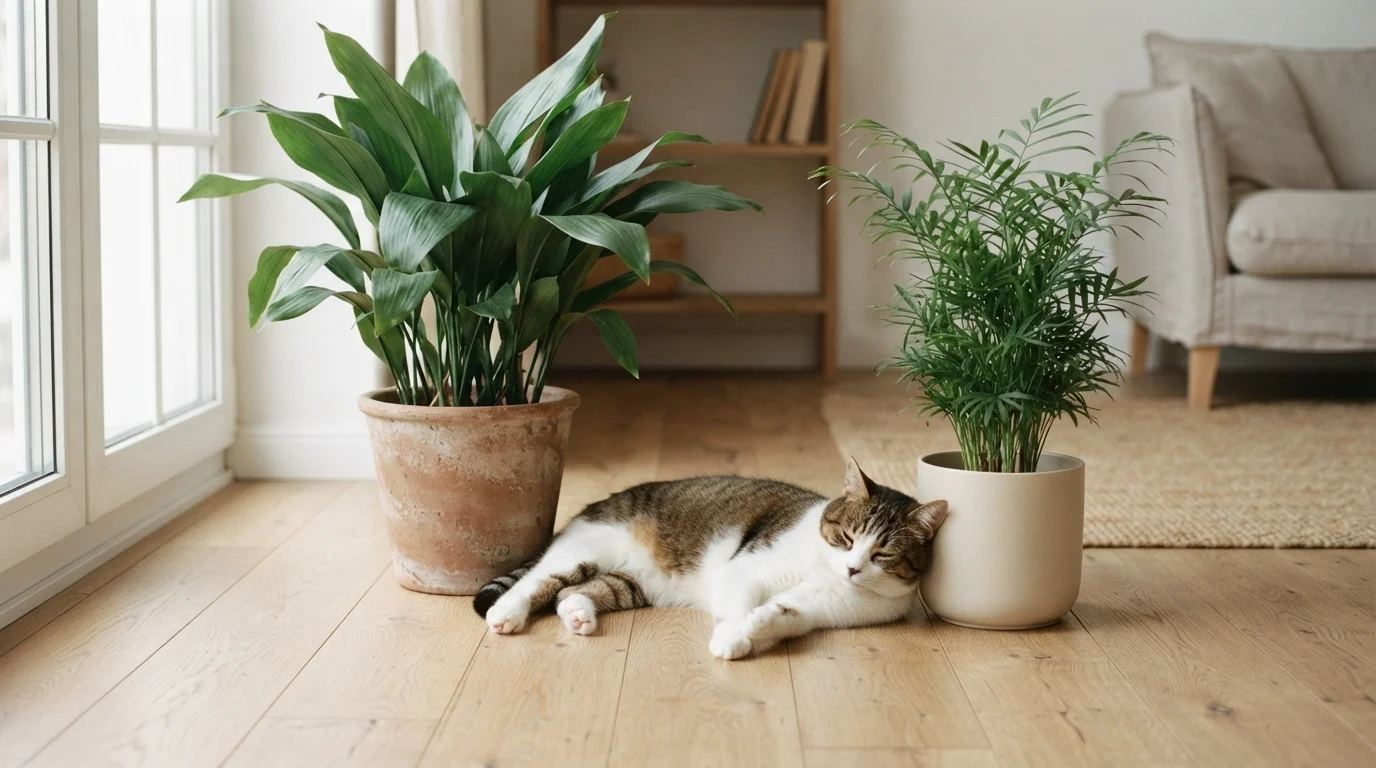
If you have cats or dogs, your shortlist is short. The cast iron plant and parlor palm are the only plants here that are both rated for low light and listed as non-toxic to cats and dogs by the ASPCA. The spider plant, Boston fern and prayer plant are non-toxic too, but they need medium light to do well (ASPCA).
Most of the toughest low-light plants are toxic to pets. Pothos, philodendron and Chinese evergreen contain calcium oxalate crystals that irritate the mouth, and snake plants and dracaenas contain saponins that cause vomiting. The ZZ plant isn’t in the ASPCA database, but NC State rates it moderately toxic to cats and dogs.
If you think your pet has eaten part of a plant, call your vet or the ASPCA Animal Poison Control Center on (888) 426-4435 (a consultation fee may apply).
Caring for plants in dim rooms
The University of Georgia names low light and overwatering as the most common causes of stress for indoor plants (UGA Extension). The two go together. A plant in dim light grows slowly and uses little water, so the same watering routine that suits a plant on a sunny sill will drown it in a dark corner. Water less often, check that the soil has dried first, and empty the saucer afterwards so salts don’t build up.
Brown, crispy leaf tips are another common complaint. The University of Georgia notes that corn plants, spider plants and rattlesnake plants are sensitive to fluoride and chlorine in tap water, and that plants with long, narrow leaves are the most susceptible.
Choosing your plant
Measure the spot first, then choose from the table above. A plant matched to its light needs far less fuss, and the one that genuinely suits your dimmest corner is usually the ZZ plant, the snake plant or, if you have pets, the cast iron plant.
FAQ
What plants can survive in low light?
The most reliable choices are the ZZ plant, snake plant, cast iron plant, parlor palm, pothos, heartleaf philodendron, Chinese evergreen and dracaena ‘Janet Craig’. University extension services rate all of them down to low light. They’ll survive at the low end but grow better with a little more.
Can a plant live in a room with no windows?
Only with a grow light or a bright lamp left on for eight hours or more a day. Ordinary ceiling lighting alone is usually too dim for anything but the toughest plants, and even those won’t grow much.
Is it safe to keep plants in the bedroom at night?
Yes. Plants release a tiny amount of carbon dioxide at night, far too little to affect you. A 2024 study found that even 18 plants in an office made no measurable difference to carbon dioxide levels.