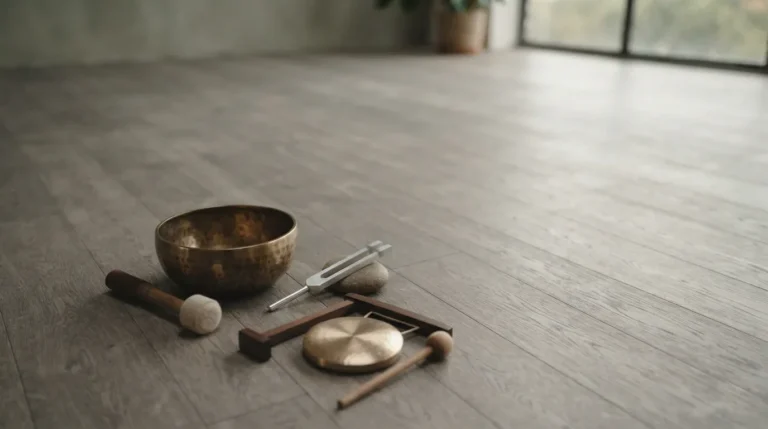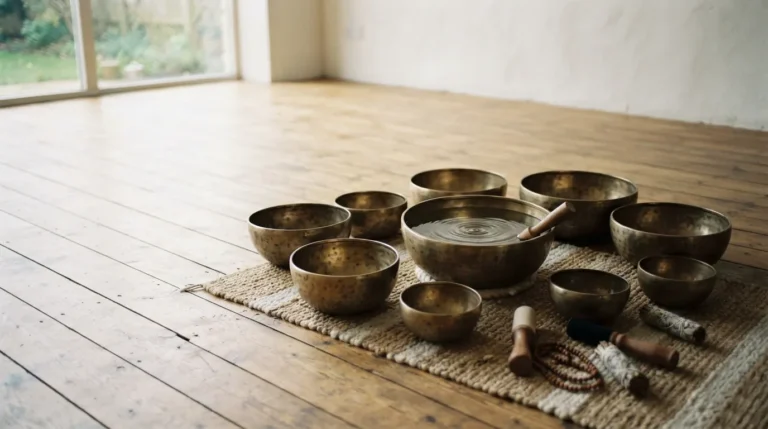

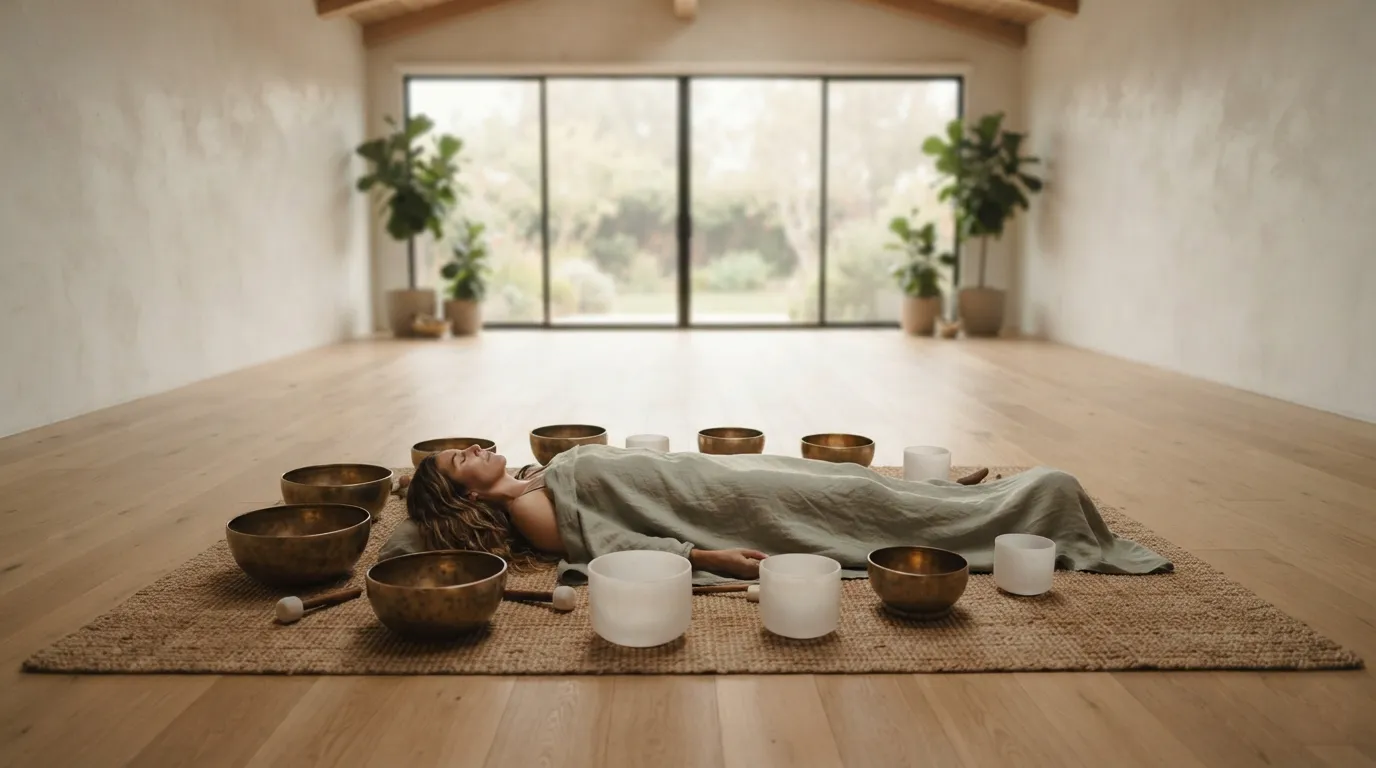

A sound bath is closer to a guided relaxation session than an actual bath — you lie down while a practitioner plays instruments like singing bowls, gongs, and chimes around you, and the goal is simply to let the sound wash over you without doing anything else.
What it actually feels like
Most people describe a fairly quick drop into a relaxed, semi-meditative state — similar to the tail end of a good yoga class or a guided meditation, just with sound doing the work instead of instruction. It’s passive in a way that appeals to people who find seated meditation difficult to sit still for.
What people report afterward
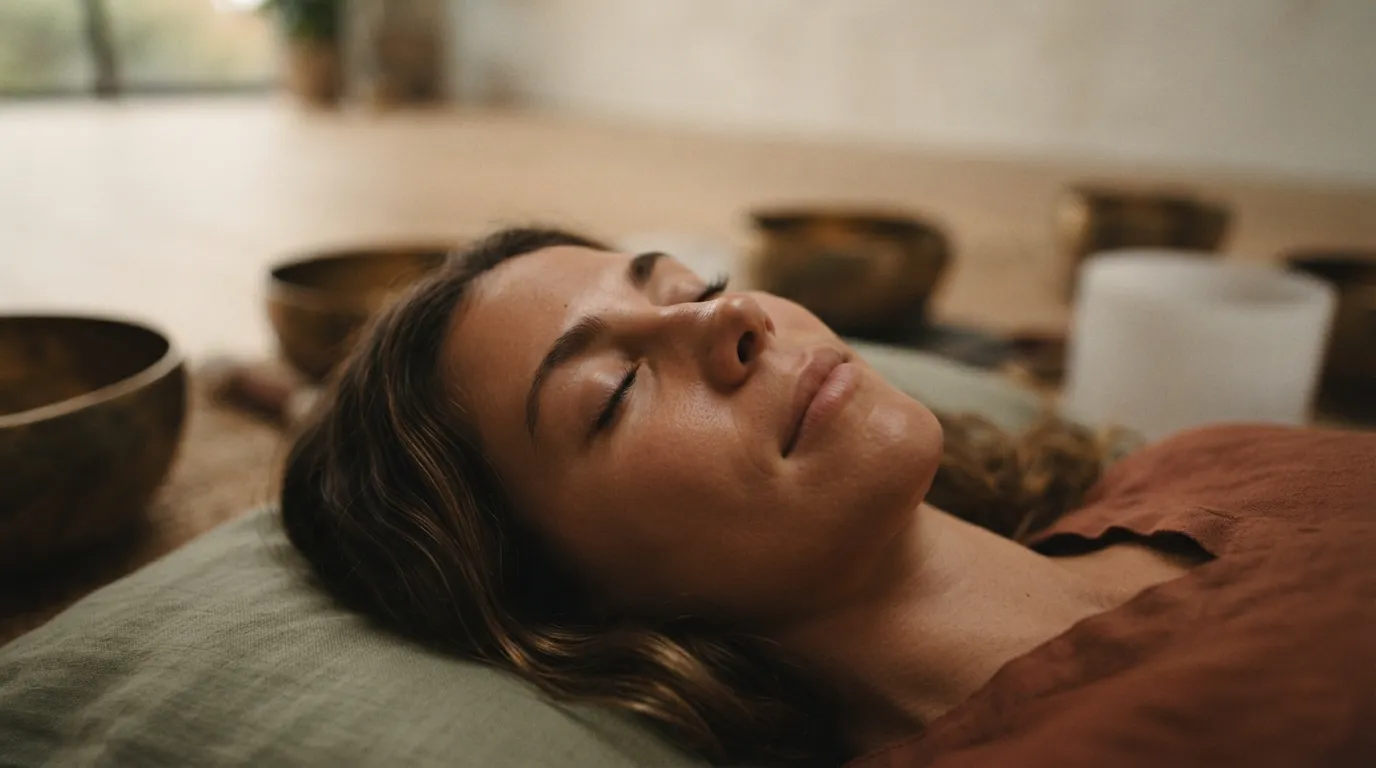
The most consistent feedback is physical relaxation and mental quiet — muscle tension easing, racing thoughts slowing down. Some people also describe an emotional release, similar to what can happen after a good cry or a long run; it’s not universal, but it’s common enough to be worth mentioning.
Trying one out
Group sessions at yoga studios or wellness centers are the easiest way in, usually 45 minutes to an hour. If you’d rather try it solo first, a recorded sound bath and a quiet room with the lights down get you most of the way there before committing to a live session.
Worth a look too: our articles on how sound healing works and sound healing instruments.
FAQ
What’s the difference between a sound bath and a literal bath?
A sound bath is closer to a guided relaxation session — you lie down while a practitioner plays instruments like singing bowls, gongs, and chimes around you, with no water involved.
What do people typically report feeling after a sound bath?
Physical relaxation and mental quiet are the most consistent effects, along with muscle tension easing and racing thoughts slowing down.
How long does a typical group sound bath session last?
Usually 45 minutes to an hour at yoga studios or wellness centers.